
By Jason McKeown
The last time Bradford City travelled to Huddersfield Town for a league encounter, the Terriers had just sacked their manager after a dismal defeat in the East Midlands. The year was 2007, and the Bantams hoped to take advantage of Town’s instability, arriving for the derby having lost two of their last three games.
This time around? Well…History is repeating itself in the build-up.
Lee Grant has just been sacked (in 2007 it was Peter Jackson who got his P45) after a 3-1 defeat to Burton (in 2007 it was a 5-1 thrashing at Nottingham Forest). And City have also lost two of their last three games.
So if all this is an omen, it’s a bad one.
Because back in 2007, City turned up physically but not mentally. They lost 2-0 in the most pathetic of circumstances – a new rock-bottom moment during an era of painful decline. The big difference? Back then, City were languishing fourth-bottom of League One, seven points below the mid-table Terriers. This time around, they are third-top, with a seven-point cushion over Town.
It would be a major shock if City are as bad on Saturday as they were 19 years ago. But a delve into the history of City-Town meetings reminds us what an emotionally charged occasion this almost always is. It’s rarely quiet. There’s almost always a story. The highs feel great. The lows feel as horrible as it gets.
Earlier this season we embarked on a potted history of City-Town derbies held at Valley Parade. Ahead of Saturday’s lunchtime meeting in Kirklees, it’s time to delve into past meetings staged in Huddersfield.
A quick word before we do. There is a slant towards more recent meetings than the distant past. This is mainly due to pressures of the day job and family life focus limiting my research time.
But just very quickly:
- The first ever Town-City derby was staged at Leeds Road in 1920, with the home side winning 1-0.
- City and Town never shared a division between 1922 and 1976. Their only meeting in that period came in the FA Cup at Leeds Road in 1930, when Huddersfield triumphed 2-1.
- On New Year’s Day 1983, Huddersfield battered City 6-3. Town midfielder Brian Stanton scored four times – three of them in the space of six minutes. It’s widely considered to be football’s fastest-ever hat-trick by a non-striker. You can read the matchday programme here.
Town 5 City 2 (27 December 1986)
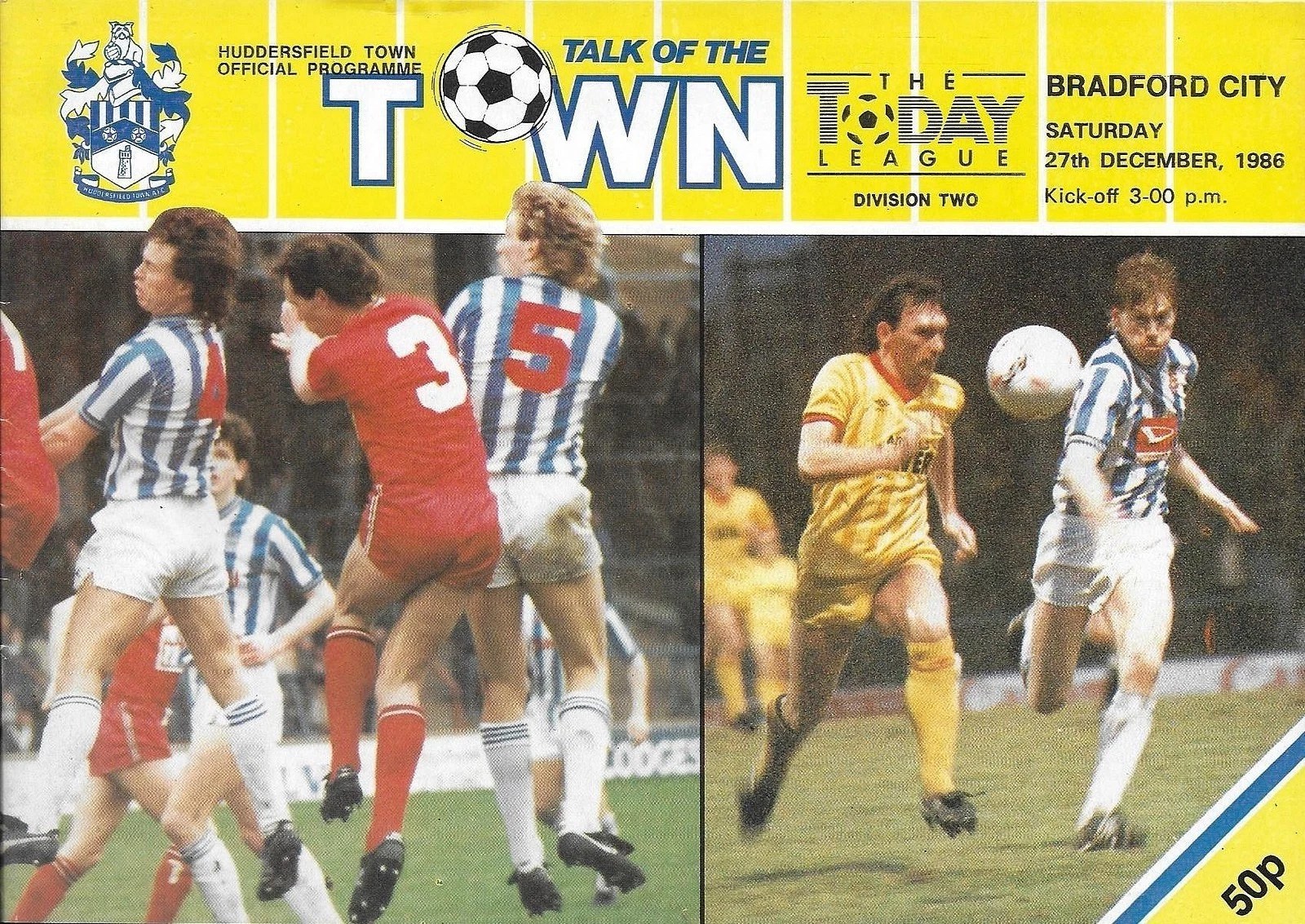
There have been some tough and ruthless Bradford City managerial sackings over the years, but for emotion and sentiment few feel crueller than Trevor Cherry’s firing in January 1987.
Cherry had taken charge in 1982, initially as player-manager. City had just been promoted to the third tier when manager Roy McFarland surprisingly quit for Derby. In came Cherry, and he continued a near-decade of Bantams progress by guiding the club to 12th and 7th place finishes before they won the league in 1984/85. That achievement was, of course, overshadowed by the Valley Parade fire disaster. Cherry was an important figurehead during the club’s darkest hour and toiled on through the dual challenges of leading the team in a higher division while being unable to play at Valley Parade.
It wasn’t always perfect, but City kept moving forward. They finished mid-table in 1985/86, playing home games at Elland Road, Leeds Road and Odsal. On Boxing Day 1986, Cherry was in the dugout for City’s first competitive match back at a redeveloped Valley Parade. After the Bantams’ second home game back at BD8, he was shown the door.
Huddersfield played a part. Just one day after that long-awaited return, City were back in action at Leeds Road. They were hammered 5-2. Town’s formidable Scottish centre-forward Duncan Shearer netted four times. It was a fourth straight defeat, and City hadn’t won since a 4-3 success over Huddersfield at Odsal earlier in December. A 0-0 draw with Birmingham followed – and that was it. Cherry was sacked.
There was uproar, with fan demonstrations against the board. Yet, harsh as it seemed, City prospered off the field. Caretaker Terry Dolan oversaw a remarkably strong end to the season, laying the foundations for the famous 1987/88 season.
For Cherry, though, it was scarring. He never managed again, despite being offered the Sunderland job a few months later. “I decided I would never again report to a board of directors in football,” he told David Markham and Lindsay Sutton in The Bradford City Story: The Pain and the Glory.
Town 1 City 1 (17 April 1994)
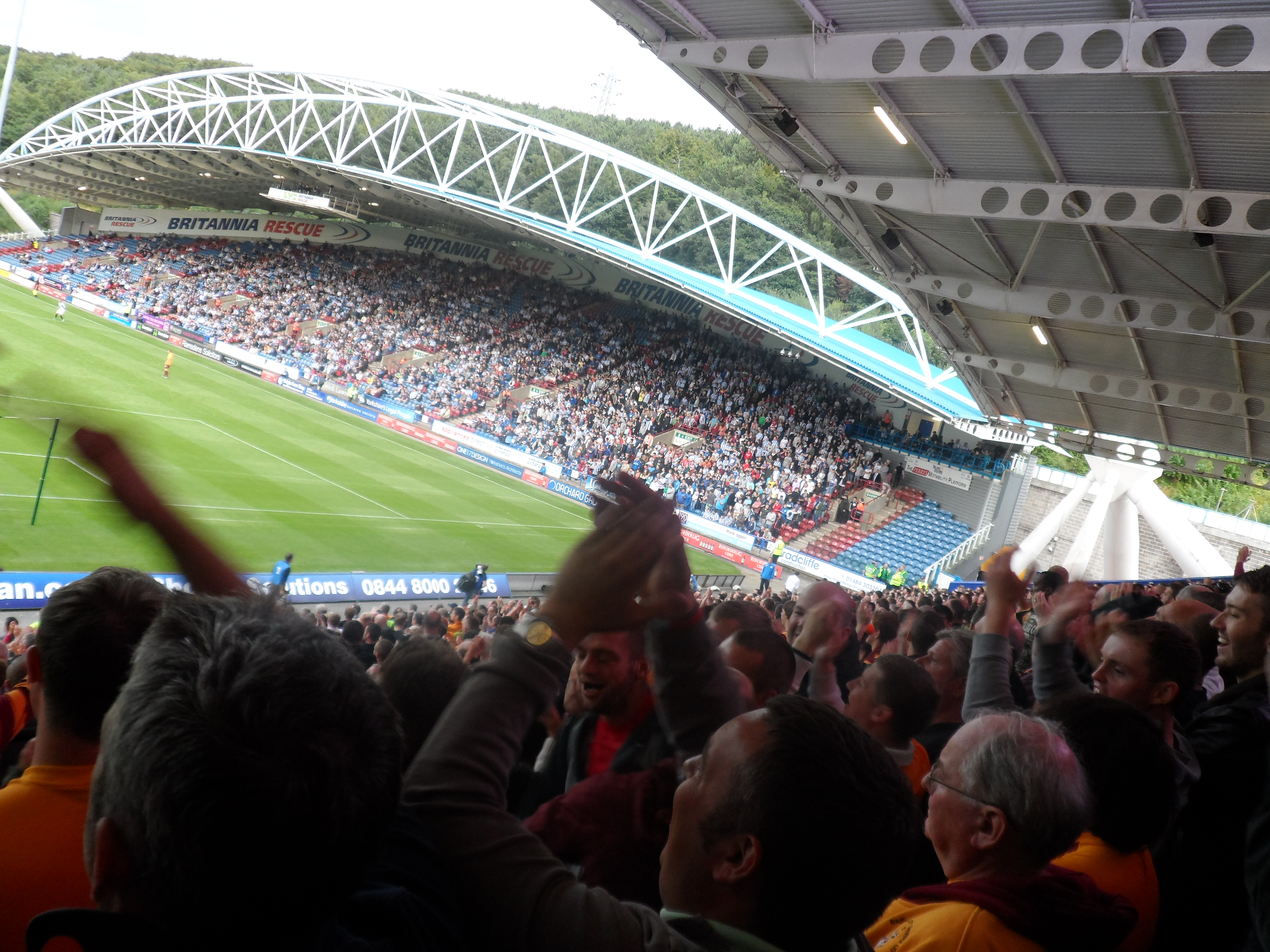
There’s an iconic photo from this match: a shot of the City fans in the away end at Leeds Road, with Town’s new stadium looming on the horizon. Big change was coming for Huddersfield after this final Town-City derby at Leeds Road. Where a Gary Williams penalty for City and an Iain Dunn effort for Town ensured the spoils were shared.
Change was also shaping Bradford City’s present and future. Just three months earlier, the club had been bought by Geoffrey Richmond. He famously declared that the Bantams would be knocking on the door of the Premier League within five years – a declaration he delivered on.
At this point, under Frank Stapleton, City were making a late push for the third tier play offs. Not winning here – against a Town side saddled in mid-table – was far from ideal. It left them with just five games left to make it, and they ended the season missing out on the play offs by one place. Stapleton was sacked.
Ambition was shaping both Town and City’s futures in a big way.
Town 3 City 3 (8 November 1996)
A Friday night derby, live on Sky. And it was box office.

City were recently promoted to Division One (now the Championship) but having a torrid time. 12 defeats from their first 19 games. Just one win since the opening day. And only two points picked up on the road.
Yet 38 minutes in, the scoreboard read Huddersfield Town 0 Bradford City 3.
It was remarkable stuff. Chris Waddle got things going early when he scored directly from a corner. Debutant John Dreyer made it 2-0, heading in another Waddle corner. And then Swedish loanee Rob Steiner – making only his second appearance for the club – fired home his first goal in City colours. Dreamland.
Alas, the complexion of the game looked very different, very quickly.
A minute after Steiner’s strike, Paul Dalton pulled one back from distance. Just on half time, Ian Lawson made it 3-2. It took only three minutes after the interval for Town to level it through Gary Grosby. 3-3, and more than 40 minutes to play.
There was obvious disappointment at surrendering a three-goal lead, yet given City’s form, a point would have felt acceptable before kick-off. It proved a small boost – City won their next game at Charlton – but the 3-0 collapse was symptomatic of the hard work they made of avoiding relegation that season.
Town 1 City 2 (2 September 1997)

Oh, what a night.
City began their second season in Division One in flying form, and this early season victory over Town was enough to send them top of the league. Town, by contrast, were enduring a nightmare start that would stretch into November before they won a match.
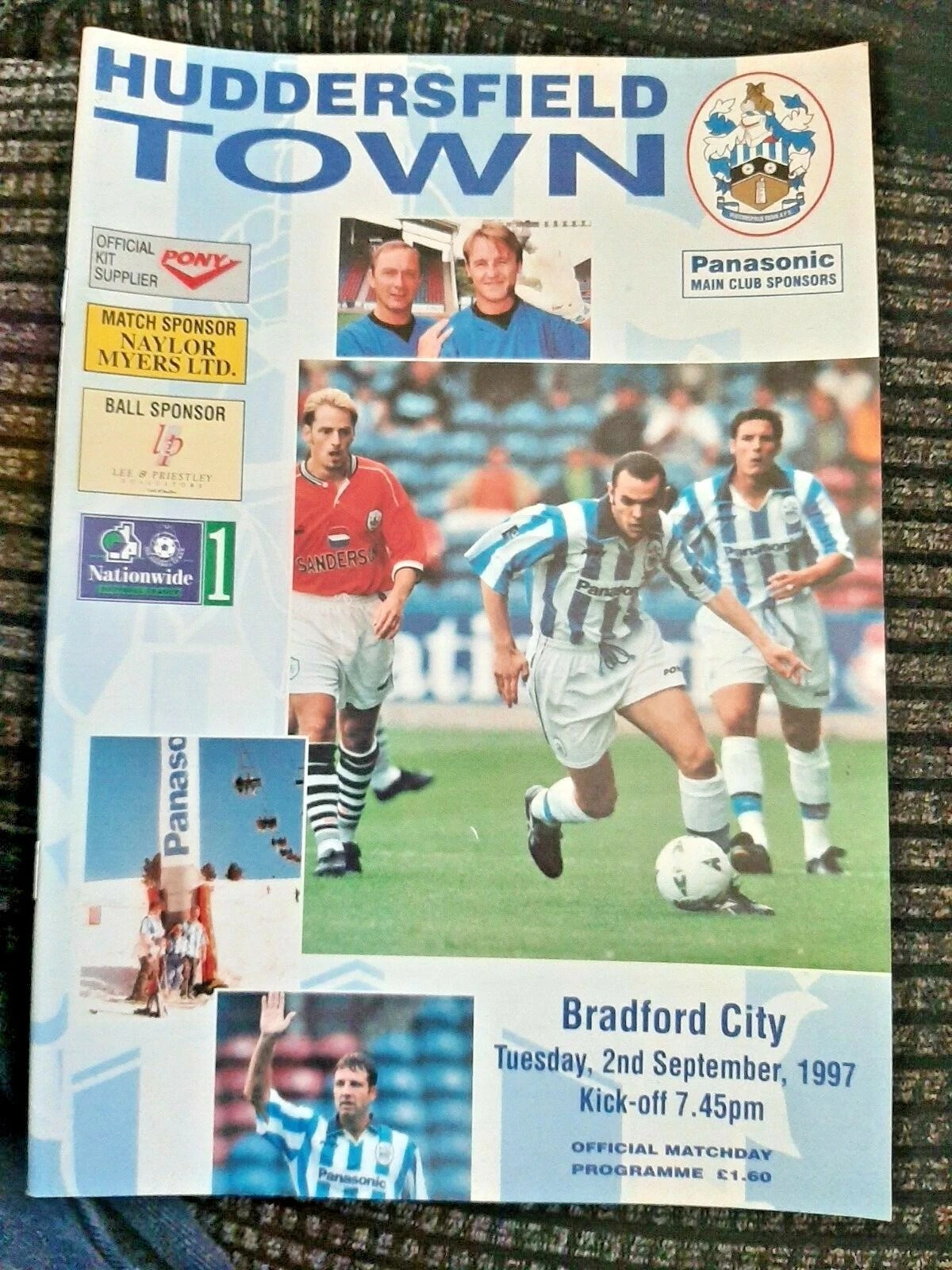
The two sides finished this Tuesday evening encounter poles apart.
The Brazilian Edinho got City up and running with a far post header, 20 minutes in. Robbie Blake was introduced from the bench on the hour, and within six minutes helped himself to a first goal of the campaign. Town did pull a goal back through Marcus Stewart, but the Bantams held on to go top of the pile.
Could they stay there? The answer was an emphatic no. Three days later City welcomed Sunderland for a Friday night battle. By the 37th minute, Sunderland were 4-0 up.
Still, it was fun while it lasted – especially trampling your rivals on the way to the summit.
Town 2 City 1 (21 November 1998)
28 Years Later – this remains an ordeal Danny Boyle would be proud to direct.
City arrived in flying form – 10 wins and two draws from their previous 14 games – sitting fifth in the table. Town, having topped the league earlier in the season, were sinking and winless in five. A week later, they’d lose 7-1 at Barnsley.
So when Robbie Blake put City ahead after 24 minutes, it followed the form book. City were superb, playing Town off the park and creating chance after chance. They should have been out of sight. But poor finishing and inspired goalkeeping from Nico Vaesen kept Town alive.
“For two-thirds of this game, it was as one-sided as a derby can be,” wrote Richard Sutcliffe in the Telegraph & Argus. “Had it been a boxing bout, the referee would have stopped it long before half-time.
But suddenly, the tables turned. 70 minutes – Paul Barnes equalised with a shot from just inside the box. 72 minutes – Grant Johnson produced a wonderful turn and volley to make it. “The game turned on its head” bellowed Yorkshire TV commentator John Helm.
Even at 2-1 down, City had all the play and Vaesen produced a miracle stop to deny Darren Moore in the last minute. Paul Jewell fumed, “Their keeper made great saves all afternoon but that is not an excuse. We should not have lost this game.”
It hurt. And for a young and naïve Jason, it got worse. My friends and I travelled on the bus in City colours. Waiting for our ride home, we attracted the attention of a large group of Town fans who pelted us with objects as we sat like ducks in the bus station.
A day to forget, in a season to treasure.
Town 0 City 1 (18 December 2004)
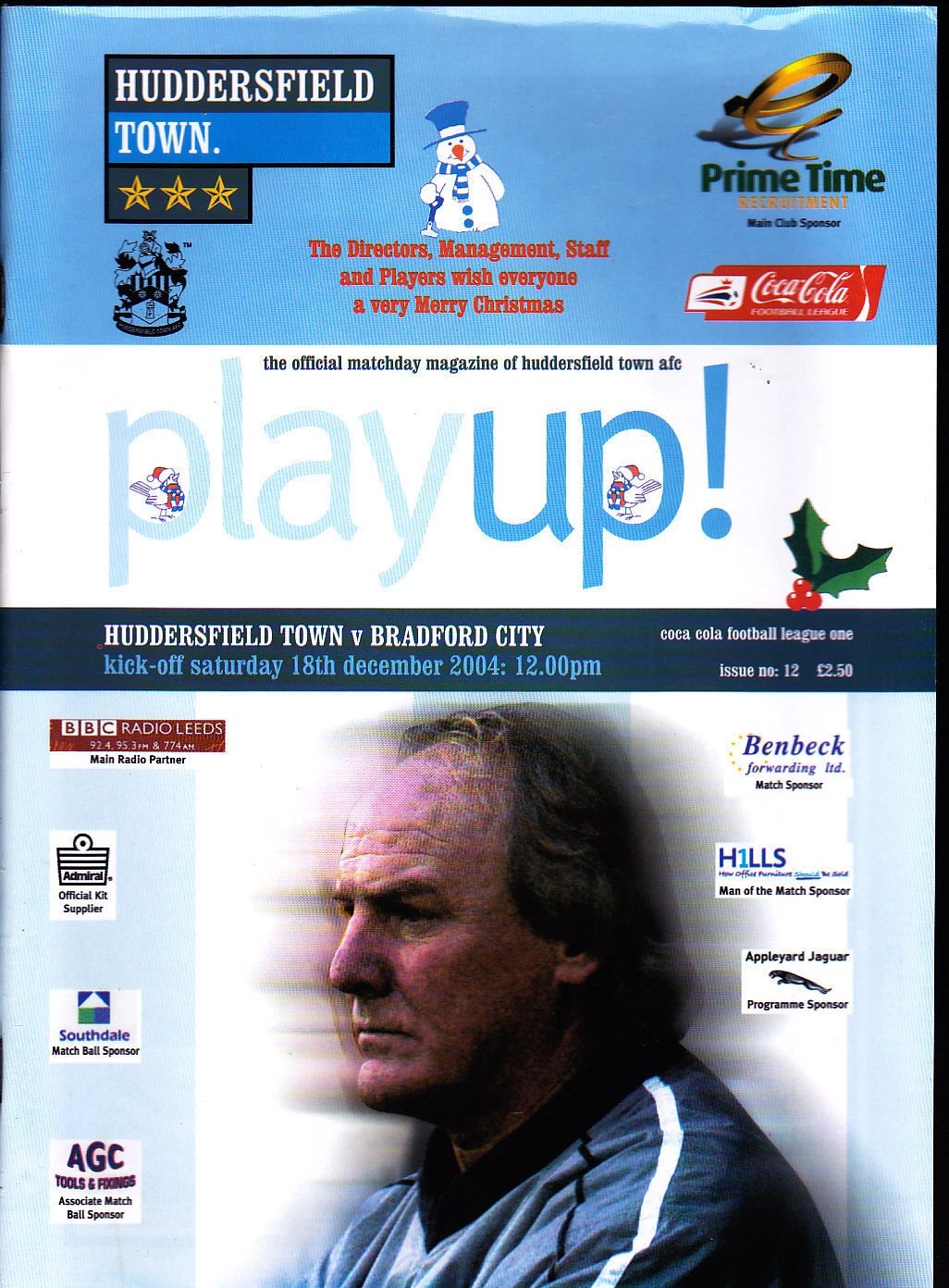
Six years passed before City visited Kirklees again. In that time, the Bantams reached the Premier League, were relegated twice, and endured two spells in administration. Huddersfield experienced their own pair of relegations and a period in admin. They were promoted from League Two in 2003/04 – the same season City dropped out of the second tier – bringing the clubs back together again.
Going into this game, City could look down over their neighbours. We’d enjoyed the more successful recent history. And when the first Town-City derby since 1999 ended in a Bantams victory, that lording-it-over-our-rivals outlook continued – at least for a bit longer.
The only goal was scored by Owen Morrison, on his full debut after signing from Stockport. “I felt right from the kick-off that I could score if I got the ball in the right positions,” Morrison said. Manager Colin Todd was thrilled, “It was a fantastic result for the players and our supporters. We’re up there, we’re doing fine, and I’d expect us to keep it going.”
I didn’t attend this one. It was my wedding day — and as omens go, not a bad one. 21 years of happy marriage later, I still mark our wedding anniversary by joking that the 18th December is more significant because it’s the anniversary of Owen Morrison’s goal against Huddersfield.
I joke it in my head, of course, rather than saying it out loud. And that’s why we’re still married.
Town 2 City 0 (10 March 2007)
Here’s that infamous afternoon we referenced at the start.
It was a day that carried the unmistakable stench of Bradford City desperation.
The first half of 2006/07 had been soundtracked by frustration at failing to mount a play-off push. Then, in January, City lost their three best players and Colin Todd was sacked. Long-serving defender David Wetherall was appointed caretaker player-manager, but struggled with the dual responsibilities. He removed himself from the side – and it went badly. Two defeats and a draw pushed City into the relegation places, including a humiliating 4-1 thrashing by a struggling Rotherham side that hadn’t won in 14 matches. The City back four that day was John Swift, Simon Ainge, Mark Bower and Ben Parker. Yikes.
Wetherall ensured he was fit enough to return for this game, and with Town’s own managerial drama there was hope of a reset. It didn’t materialise. City were dreadful – one of the worst performances I’ve ever witnessed. They were 1–0 down inside 140 seconds, Paul Hayes scoring. “The job is hard enough when you’re at the bottom,” groaned Wetherall afterwards. “To give the other team an advantage like that makes it twice as difficult.”
City failed to register a single shot on target. Their best effort – a Steven Schumacher attempt – was so wayward it cleared the stand behind the goal. Danny Schofield finally put them out of their misery to make it 2-0.
It was grim. So grim.
As Simon Parker wrote in the Telegraph & Argus, “City’s disillusioned travelling army had nothing to cling to in defeat. No decent shots; no fight and desire, apart from one or two notable exceptions; no obvious hope of finding a solution to this slide towards the oblivion of the basement division.”
City finished the season relegated to the fourth tier for the first time in 25 years – the inevitable reward for a campaign that unravelled so spectacularly.
Town 4 City 0 (12 August 2008)
New era. New disappointment.
In League Two, City welcomed new joint owner Mark Lawn, introduced affordable season tickets, and brought back the legendary Stuart McCall to begin his managerial career. The first season didn’t quite go to plan, but in the summer of 2008 City spent big and talked big. Julian Rhodes spoke not just of going up, but of back-to-back promotions.
A first-round League Cup tie away at Huddersfield offered an early yardstick. It was not encouraging.
Since that last league meeting, Town had continued to muddle about mid-table in League One – but they easily put City in their place. After a goalless first half, future Bantam Jon Worthington put Town ahead. Gary Roberts scored twice, and Robbie Williams had the Terriers singing while they were winning.
“There weren’t too many positives,” admitted McCall afterwards. “I’ll be disappointed and hurt by that for a long time – and I know the supporters will be too. But realistically, Huddersfield are a division higher than us and a far better side – that’s just a fact.”
It was a miserable, rainy night. With five minutes left, my friend and I decided to leave early. Feeling smug about beating the traffic, I promptly misjudged a kerb and gave myself a flat tyre. It took over an hour to fix in torrential rain.
And that is why you should never leave a game early.
Town 2 City 2, 3-4 on pens (4 October 2011)
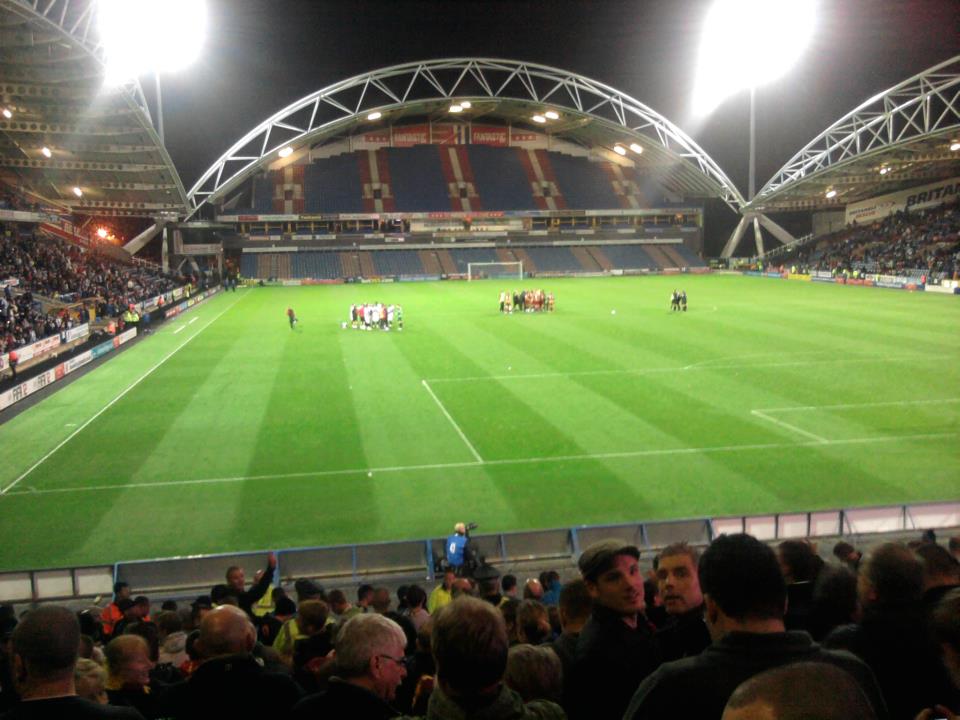
It’s largely forgotten now, but Phil Parkinson did not make a great start as City boss. His first six games brought no wins, and the Bantams slumped to 22nd in League Two. What they needed was a lift. A spark.
They got it in a Football League Trophy tie at Huddersfield – against a Town side unbeaten all season and in the midst of their famous 42-game unbeaten league run.
The odds were stacked against them. Yet City twice led – first via an Antony Kay own goal, then through a bullet header from Luke Oliver. Town responded both times, forcing penalties. City prevailed 4-3, with Niall Rodney converting the winning spot-kick.
“I’m really proud of the boys,” beamed Parkinson. “It was a tremendous performance – and I’d be saying the same even if we’d lost the shoot-out.”
Technically, it was Parkinson’s first win as City manager. It proved a launchpad for a reign to savour. It was also part of City’s own record-breaking run of consecutive penalty shoot-out successes.
Town 2 City 1 (6 August 2013)

A very different Bradford City returned to Kirklees two years later – one that could wear the badge of League Cup finalists. Yes, 2012/13 had happened. Wembley, twice. Promotion. Good times again.
So when City were drawn away to Huddersfield in the first round of the League Cup, excitement was high. City were now a League One side; Town had also been promoted and were competing in the Championship. Still, after all those giant-killings the season before, what was there to fear?
As it turned out, indifference.
Parkinson rested seven players. Town fielded a stronger side. Summer signings Jason Kennedy, Matt Taylor and Rafa De Vita all made full debuts and looked off the pace. “When I make changes it isn’t weakening the side,” argued Parkinson afterwards. “It’s putting in fresh players – and some of the lads did great.”
Maybe. But City didn’t take the competition anywhere near as seriously as they had 12 months earlier. They lost 2-1. No cup run this time.
As Guardian journalist Richard Jolly observed, “If Bradford City’s achievements last season felt unique at the time, confirmation came swiftly.”
The goalscorers are interesting in hindsight. Both Town goals came from James Vaughan – perhaps, at this stage of his career, the M62 commute from Merseyside wasn’t such a burden. City’s late consolation came from Nahki Wells.
Few could have imagined that, within months, Wells would be wearing Huddersfield’s blue and white.
Categories: Opinion
 Tyreik is getting it (W)right
  We always win at home, but never away
  The January window closes with Bradford City adjusting to new realities
  The chant that keeps costing Bradford City
  widthofapost.com
Nothing to fear on Saturday, but the form book and past histories goes out the window. We need to start off where we left off against Cardiff. More than capable of beating our rivals …again. But it’s up to GA to pick the right team and the right formation. Sometimes I think he’s spoilt for choice with the squad members and ends up changing the team during the game? He needs to be 100%. And so does the team playing for the shirt! Let’s turn over the Terriers in their own back yard that will add to such a successful season already. Come on the Bantams let’s put up a great performance for the Sky viewers and show them that we’re serious contenders for promotion!