
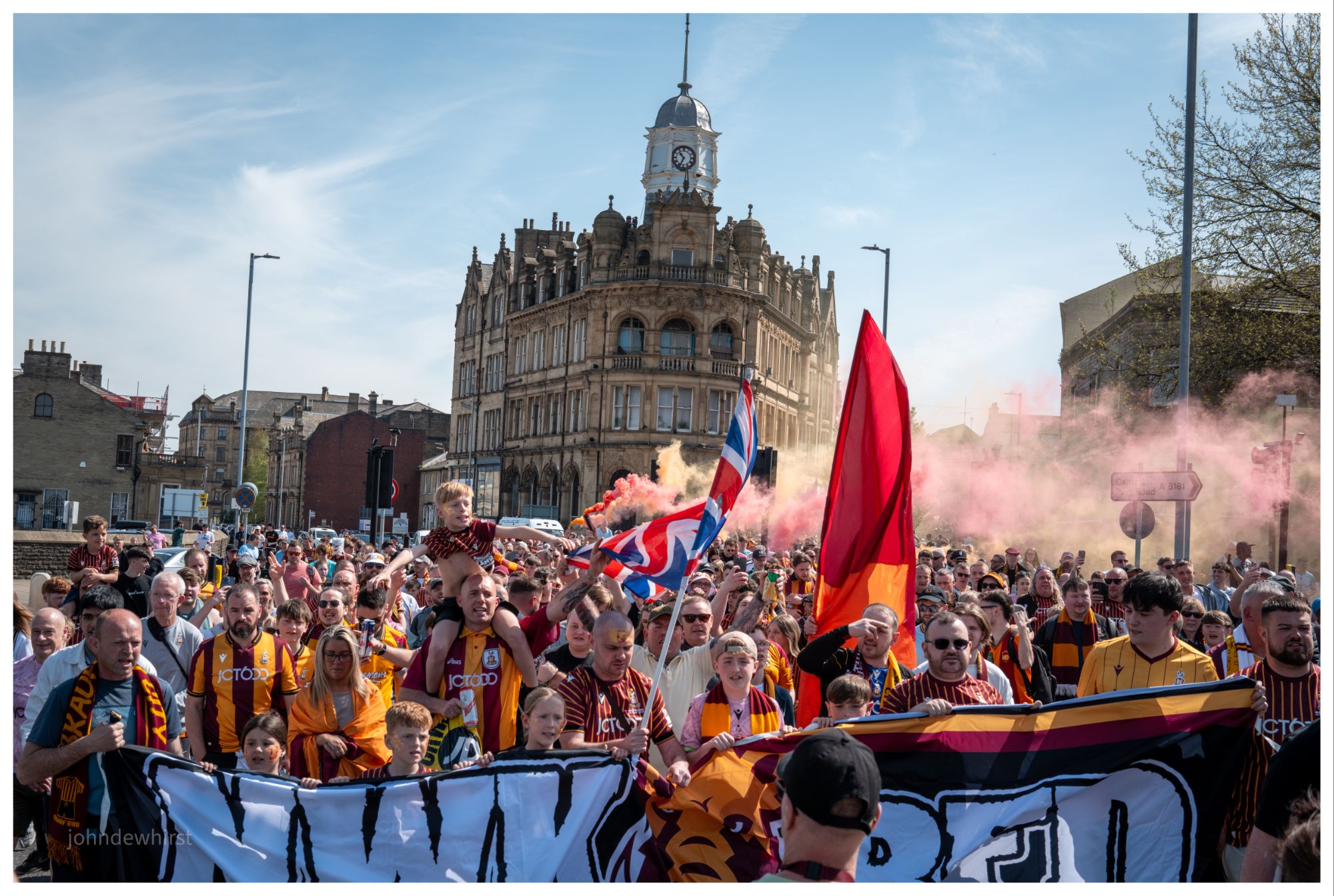
By Jason McKeown
The hardest part of making sense of Bradford City’s play-off semi-final first leg defeat at Bolton is that, for now, it exists without full context.
It won’t be until after Thursday night’s second leg that we will know how significant the events at the Toughsheet Stadium prove to be in deciding who reaches Wembley. And in this suspended moment, both teams can make a convincing case that the first leg outcome has left them in a strong position. Equally, both may be wrestling with doubts that they are not quite where they need to be – and that the events of the first 90 minutes could yet carry a heavy price in the 90 to come.
It’s an uncertainty that will be shared by both sets of supporters. If you’ve spent the last few days sticking rigidly to the belief that your team will either succeed or fail from here, you’ve done well to stay so certain. The rest of us have drifted between confidence and outright fear.
You can make a strong case for Bolton completing the job. You can make an equally compelling argument for City turning it around. It really is a tie delicately balanced, and the closeness of the first leg suggests the second battle will come down to similar fine margins.
City’s strong home record comes into play
Bradford City and Bolton’s regular seasons were the story of being extremely strong at home (City’s PPG on home soil was 2.17 and Wanderers’ 2.04), whilst not being quite the same force on the road (City’s PPG away from home was 1.17 and Wanderers’ 1.22).
Bolton have already had their opportunity to make home advantage count. On Thursday, it is City’s turn. And in Valley Parade, they’ve built quite the fortress. Over the last two seasons, their home record reads:

It’s an impressive return, particularly after so many previous seasons in which inconsistent home form undermined City’s progress.
It’s also a major managerial achievement from Graham Alexander. He has instilled in his players the bravery and conviction to perform in an arena that many of their predecessors found difficult to handle.
Psychology clearly plays a role, but this is also a tactical triumph. Alexander has recognised the relative narrowness of Valley Parade and shaped a system that uses a back three to provide defensive width while allowing players to push forward. Combined with an aggressive high press, it allows City to box opponents into tight areas and keep them pinned back. It is a direct, front-foot style that resonates with supporters.
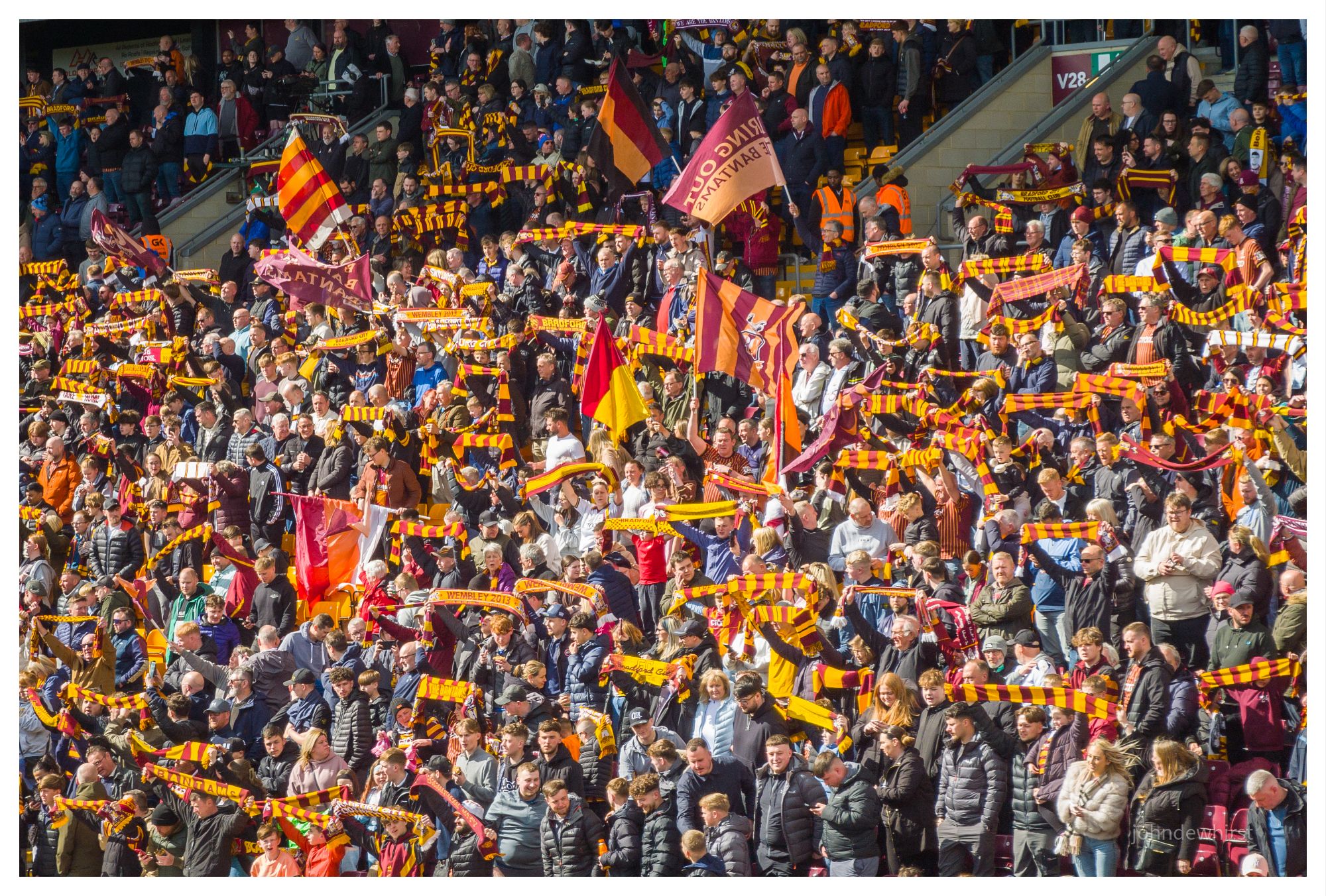
And the Bradford public has responded in kind. This season, City recorded their highest average league attendance in 104 years. Thursday’s second leg is close to being a sell-out, and the atmosphere is likely to test Bolton’s mentality.
A slight concern is that City’s dominant home form has dipped recently, with just one win in their last five at Valley Parade. That said, Bolton themselves have also won only one of their last five away games.
Although of course, they don’t have to win on Thursday.
Finding a way to hurt Bolton
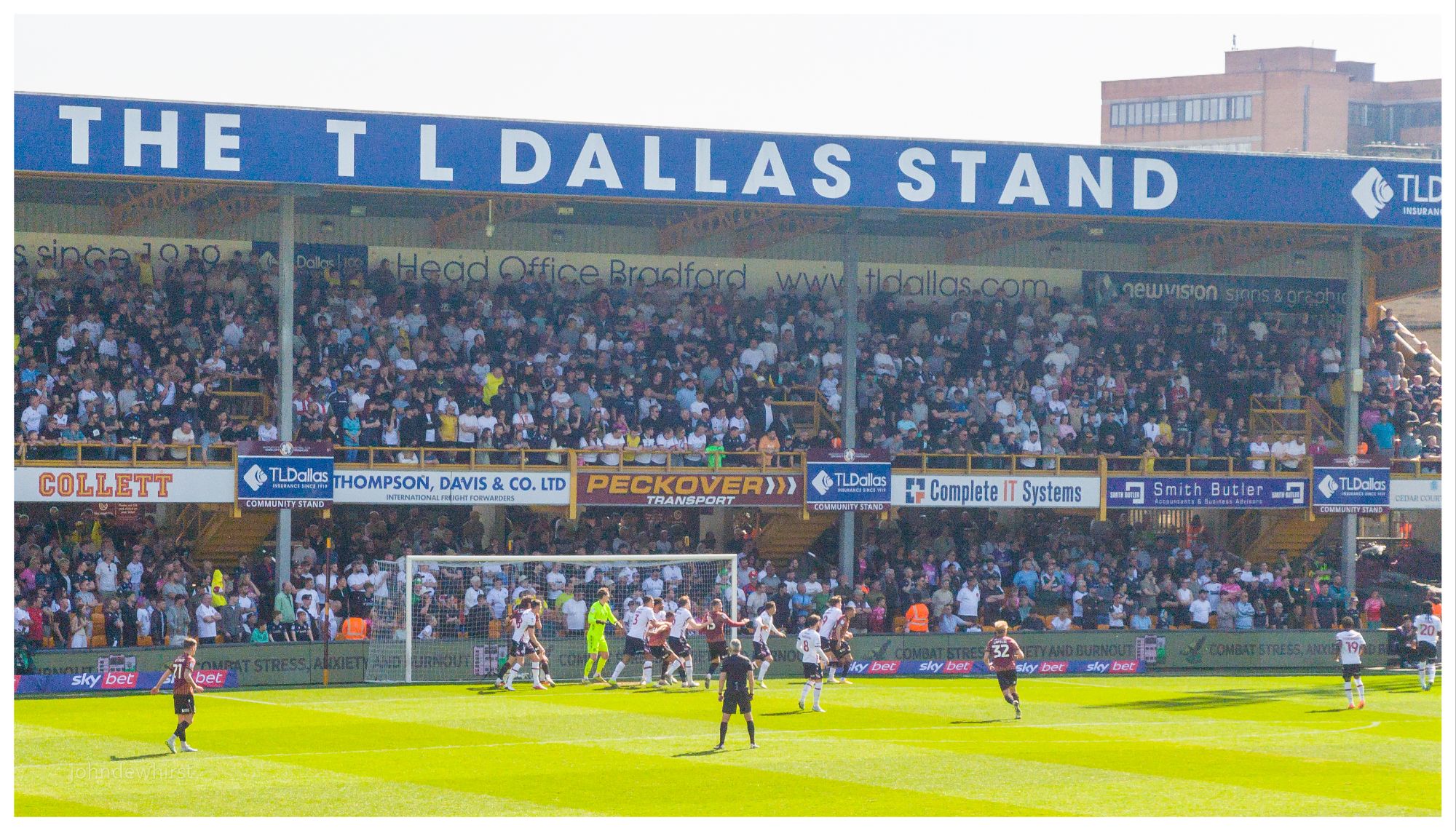
The Valley Parade second leg will be the fifth meeting of the season between City and Wanderers – and while the Bantams haven’t performed badly in those games, they are yet to record a win.
More concerningly, they have struggled to impose themselves.
The numbers are not encouraging.
City’s possession across the four previous meetings reads 42%, 37%, 45% – and 35% on Saturday. The shot data is even more stark: three, one, two and zero shots on target. That is six efforts on target across 360 minutes of football (plus stoppage time). And one goal.
Touches in the opposition box tell a similar story: 17, 17, 21 and 13 – a total of 68 compared to Bolton’s 98 across the four games.
Expected goals (xG) reinforces the pattern. City recorded 0.66 in the goalless league draw in November (Bolton 1.01), 0.83 in the 1-1 draw at Valley Parade (Bolton 1.25), and 0.48 in the first leg (Bolton 0.90). xG data is unavailable for the EFL Trophy meeting.
To an extent, City’s lack of attacking threat in the first leg was understandable. The priority was to avoid being overwhelmed, and they achieved that through a disciplined defensive display that restricted Bolton to just one shot on target – the goal.
Nevertheless, if City are going to overturn the deficit, they will need to deliver a far more dangerous attacking performance than the first leg. And, indeed, compared to the three other City-Bolton meetings this season.
And that leads directly to the key dilemma.
Who plays, and what shape do City go with?
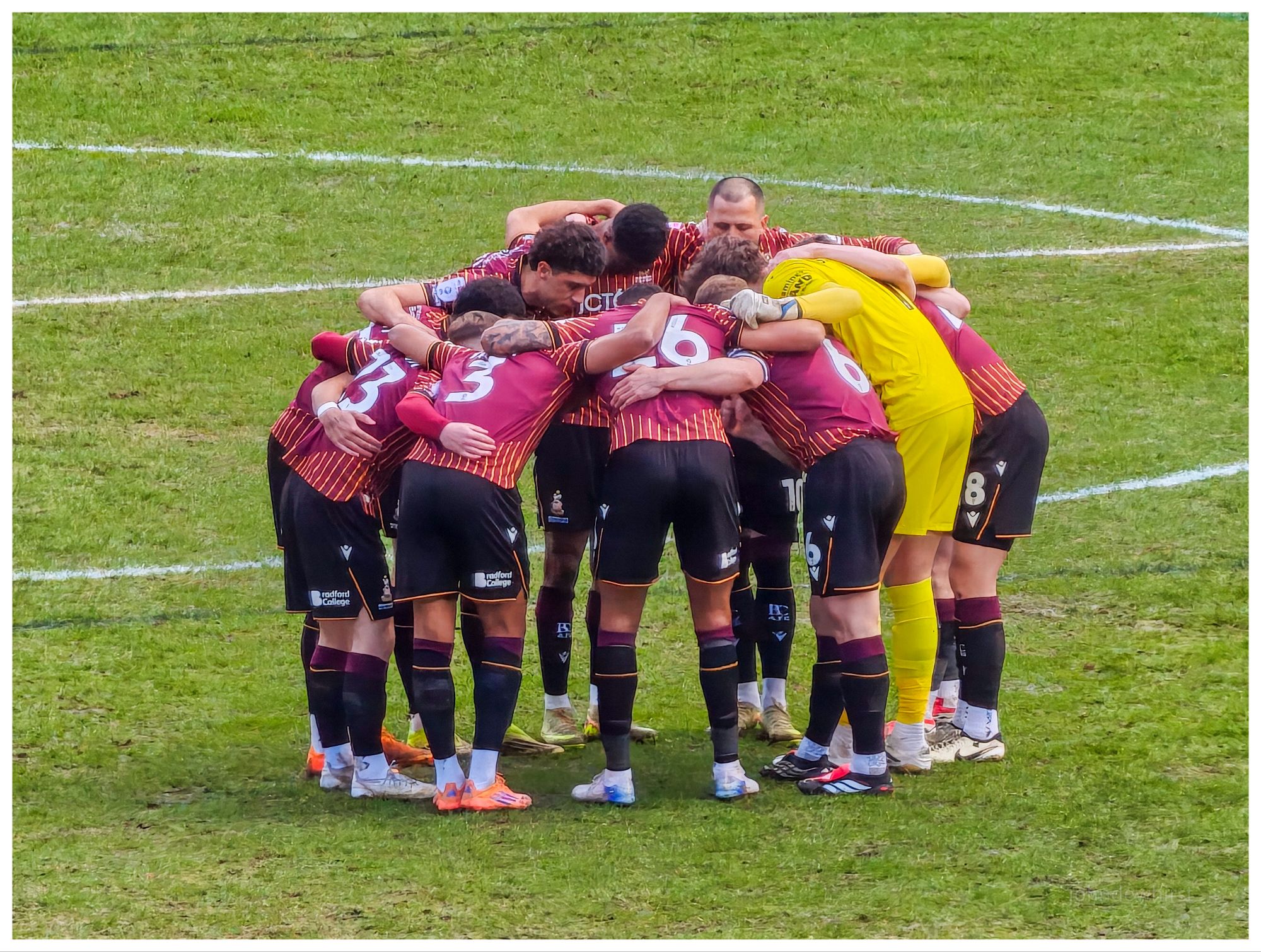
In the recent 1-1 draw at Valley Parade, Graham Alexander took a bold approach, abandoning the back three to match Bolton’s 4-2-3-1. That allowed Josh Neufville to operate higher up the pitch and cause problems. But it was high-risk, and at times left Aden Baldwin and Ibou Touray exposed to Bolton’s wide players. And it still didn’t lead to a significant number of City chances.
So the question is whether to try that approach again, or revert to the more familiar 3-4-3.
Team news – and particularly the availability of Bobby Pointon – may go a long way to deciding that. Even if City’s homegrown hero doesn’t quite make it back from injury to start, Tyreik Wright could be used on the left of a front three, or Stephen Humphrys could be entrusted with a role.
Alexander could stick with Antoni Sarcevic and George Lapslie either side of Kayden Jackson, but Saturday’s pattern suggests that may again limit attacking output.
The first leg battle between Jackson and Chris Forino was fascinating and could well be key again. Bolton like to play a high defensive line and bring the ball out. Jackson’s biggest strengths include pace and the ability to play on the shoulder of the last man. Can he get the better of the Bolton defender and get in behind? If he’s going to have opportunities to succeed, City have to get the press right around him.
The bottom line is City need to find a way to have more of the ball. They have to gamble on getting more players forward, so their press can function properly. They have to spend less time attending to Bolton’s dangerous attacking players. And they have to give the visitors more to worry about.
But that naturally comes with risk.
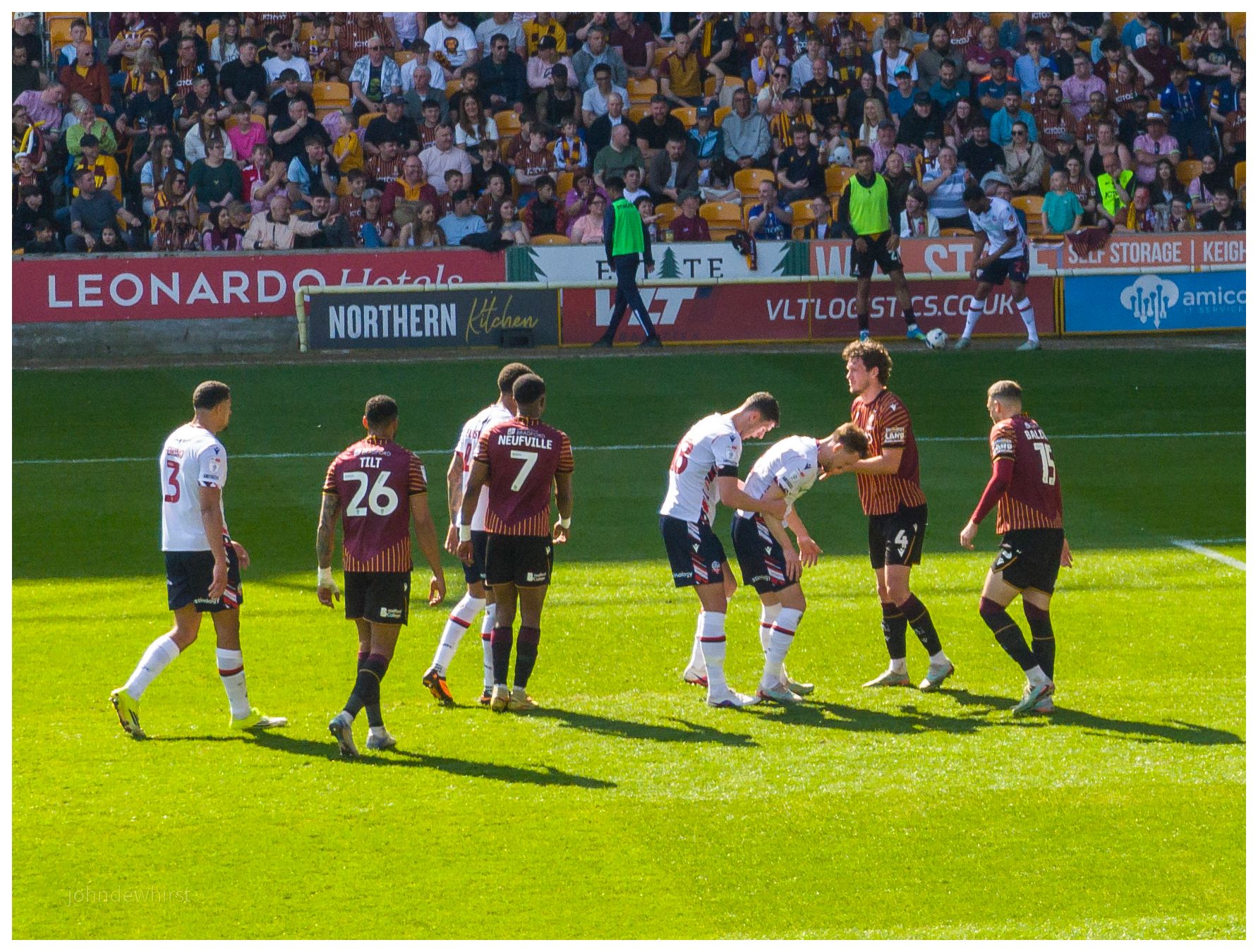
Will Bolton keep Boltoning?
Steven Schumacher has built a Wanderers side that, throughout the season, have treated attack as their best form of defence. They are expansive, open, and full of players who want to play forward.
Even protecting a lead, that is unlikely to change.
There are vulnerabilities, however. Jordi Osei-Tutu, a converted forward, began nervously at right back. He made an early mistake that allowed Sarcevic in on goal. He’s very good on the ball but looked slightly suspect when City ran at him.
Then there’s the goalkeeper Jack Bonham, who produced at least three heart-in-mouth moments in the first leg. One unconvincing punch, when he should have claimed, stood out. And later, when Tyreik Wright sent Jackson through, Forino’s excellent recovery challenge masked the fact Bonham was all over the place in trying to stop the City attack. His indecision does not inspire confidence.
If City can become a more potent attacking force in the second leg, they’ll feel Bolton’s frailties give them a chance. Early set pieces should really focus on making things uncomfortable for Bonham. Testing the fragile confidence the keeper appears to hold, in the hope he may fall apart. And try to isolate Bolton’s full backs, who probably won’t get much cover support from Ibrahim Cissoko and Amario Cozier-Duberry.
But because of their defensive flaws, Bolton are unlikely to sit deep and protect their lead. As Bolton News journalist Mark Iles summarised after the first leg, “Schumacher’s side won’t play for a draw, we know that much. And even if they do approach the game with a more pragmatic mindset, the likes of Cozier-Duberry, Cissoko and Rodrigues are still perfectly capable of illuminating a game with a touch of brilliance. Bolton’s focus must surely be on replicating this level of tenacity, winning duels, landing on second balls and refusing to lose focus against the darker arts their opponents are more than happy to employ if they must.”
This all forces City into a difficult balance: attack, but without exposing themselves.
Cissoko and Cozier-Duberry, inconsistent in the first leg, became more effective when instructed to stay wide. They have already caused problems at Valley Parade this season and will look to do so again.
Bolton won’t get much from either of them defensively, but going forward both players remain major threats. City effectively double-marked them in the first leg but might not be able to afford that level of caution this time.
What will be key is what Bolton do in the top half of the pitch down the middle. Player of the season Sam Dalby was only fit enough for the bench in the first leg, after injury. He looked useful when he came on, and if he’s able to start Schumacher could play him as the number 10 behind Mason Burstow, or up front ahead of the Hull loanee.
On Saturday Bruno Rodrigues was asked to play number 10 instead of his usual role in central midfield. It lacked quality at times, but as Iles wrote in another fine piece for Bolton News, it had some, George Lapslie-esqe positives. “The former Oxford United man can’t realistically be called a ball-winner but he did provide pressure on Bradford’s defenders and Bolton were able to win the ball back high up the pitch on a number of occasions.
“Roughly 40 per cent of Rodrigues’s 45 touches were in his own half and he had just one shot on goal. But neither Antoni Sarcevic nor George Lapslie – Bradford’s own attacking elements in midfield – were anywhere near as involved. An extra link in possession allowed Wanderers to control the game in the more advanced areas of the pitch, underlined by the 175 passes they played in the opposition half.”
Given Bolton will want some robustness in the middle for the away leg, Rodrigues might be asked to play the same role again, behind Dalby/Burstow. And that, alongside their brilliant wide players, would mean that Bolton certainly have the weapons to cause damage.
They know City know this – and that alone may limit how aggressively the hosts commit forward. And as Cozier-Duberry showed on Saturday, they only need one moment to make it count.
If Bolton score at Valley Parade, it becomes a very difficult task for City.
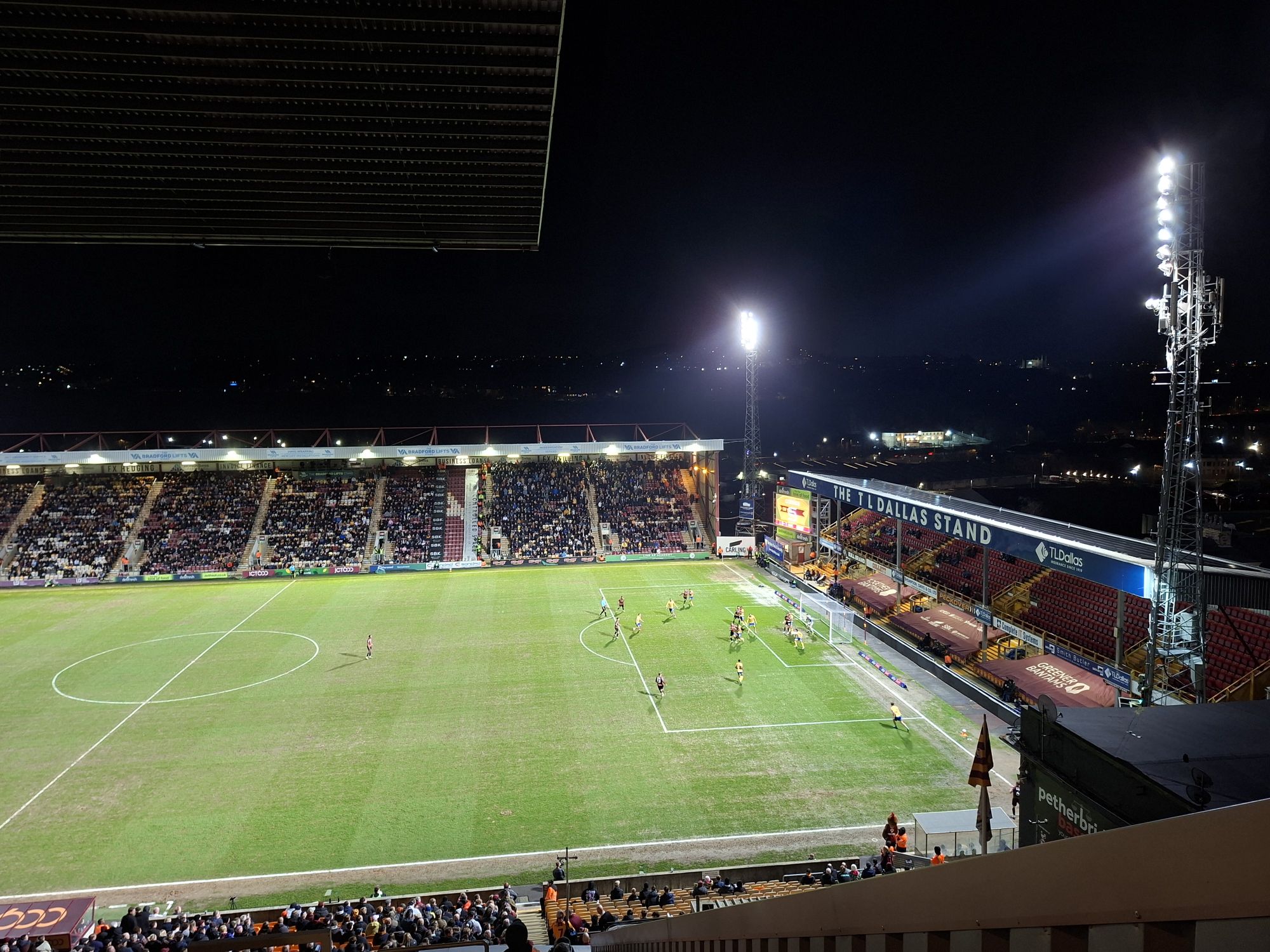
That’s why City might be happy to make it a long night
Kick-off is 8pm. The final whistle might not arrive until close to 11pm.
As things stand, City need two goals to win the tie outright. But one goal in 90 minutes would be enough to take it to extra time, assuming Bolton do not score. If Alexander was right now offered a 1-0 win and extra time, he would almost certainly take it.
For that reason, patience will be crucial.
This is not a tie City can win in the opening 20 minutes – but it’s certainly one they could lose early. Start too aggressively, and there is a risk Bolton strike on the break, or that City use up their energy too quickly and fade.
0-0 at half-time is no cause for concern. Even 0-0 after 70 minutes remains a strong platform. At some point City must turn the screw, but not necessarily from the start.
The starting XI will be important, but the subs will have a huge role to play.
It could be a long night, and durability will be just as important as ambition.
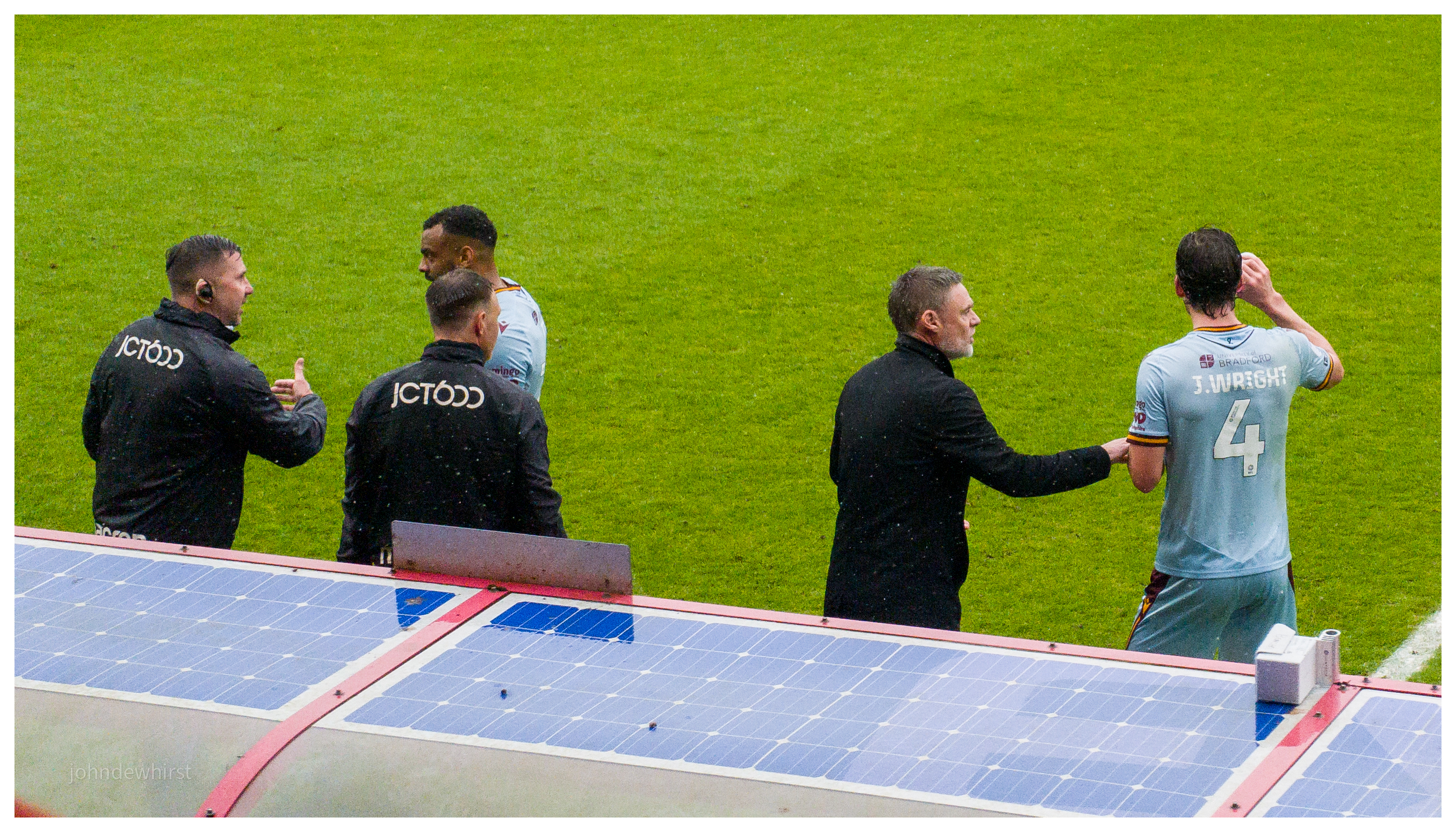
A night of new experiences (but not for everyone)
The last time Bradford City played a two-legged tie with the second game at Valley Parade, they won 7-2. It came in September 2000, when the Bantams were a Premier League side entertaining fourth-tier Darlington in the first round of the League Cup, having won the first leg 1-0.
Darlington rested players and were later fined. City made hay, with a side featuring Benito Carbone, Dean Windass, Ashley Ward, Gareth Whalley and Jamie Lawrence filling their boots.
A repeat of that scoreline on Thursday would do just fine, lads.
More realistically, though, this is a step into the unknown. City have never played a play-off semi-final second leg at Valley Parade. And even when they famously reached the League Cup final in 2013, their two-legged semi-final against Aston Villa concluded at Villa Park.
As a manager, Alexander has been here before of having a second leg home game. 12 years ago, he led Fleetwood to League Two play-off promotion after overcoming York City in the semi-finals. His side included a certain Antoni Sarcevic – and current Bolton manager Steven Schumacher.
Fleetwood did not win the home second leg, drawing 0-0 with York after earning a 1-0 first leg victory at Bootham Crescent. In fact, Alexander has never won a play-off home leg in normal time. As Scunthorpe manager in 2016/17, he oversaw a 0-0 first leg draw away at Millwall before losing the return leg 3-2 at home. And in 2018/19, he guided Salford through a National League semi-final against Eastleigh after a 1-1 home draw, eventually winning on penalties.
Still, Alexander has two play-off promotions on his CV. And as a player, he helped Burnley reach the Premier League through the Championship play-offs 16 years ago. He lost a play-off final to Bolton when at Preston, so will relish a bit of personal revenge.
He has been here before. He has endured failure. But he has also succeeded. And that experience could prove vital.
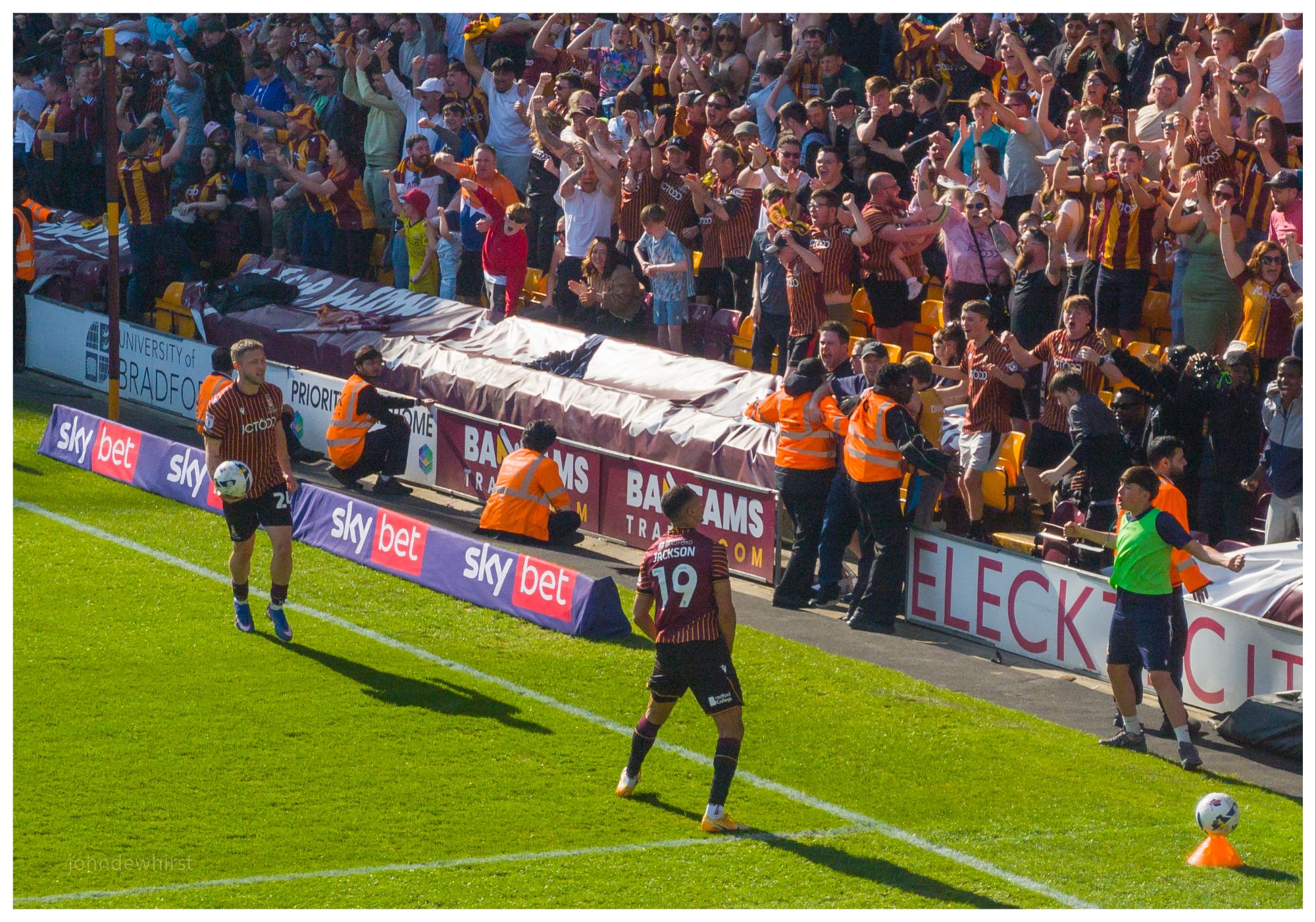
It’s all or nothing
On Thursday, around 23,000 of us will walk through the turnstiles at Valley Parade. The only guarantee is that we will leave carrying strong emotions.
It might be the pain of aggregate defeat. Of this most wonderful of seasons having an unsatisfyingly negative ending. Of wounds to lick.
Or.
It could be the emotion of unbridled joy. Of a manic pitch invasion. Of the PA system blasting out Que Sera, Sera. Of excitement over planning a trip to Wembley. Of this wonderful adventure continuing.
There is no middle ground. Everything is on the line.
This play-off tie is still a story waiting for its meaning. And only when Valley Parade falls silent on Thursday night will we finally know how it should be read.
Categories: The 2025/26 play offs
 Heartbreak cannot overshadow a Bradford City season to remember
  One night from Wembley
  The Width of a Post podcast – Bradford City vs Bolton play-off interlude
  Alive and kicking – Bradford City take on some Bolton damage but keep play-off tie alive
  widthofapost.com
Having somehow managed to ‘park it’ for a few busy work days, this article has brought Thursday sharply into view and I’m already in danger of walking into Valley Parade exhausted from all the ‘what ifs’…
I hear Jason’s sensible calls for patience and pragmatism. That 0-0 after 70 minutes might not be the worst outcome for City in the context of the tie itself.
But by the skies that sounds unbearable for those of us watching on 😂
Alexander and the squad have to keep their heads, but as a fan I want to see us really get into them (*and f… so the song goes) from minute one. After all, ‘This is Our House’.
In my mind, walking away from Valley Parade – whatever the result – must include the sense that we gave it absolutely everything. Everything. Previous play-off games at home have been tinged with the sense we weren’t quite at it, a bit too calm and collected for our own good, and I’d love to see us catch them off guard by playing full throttle direct football.
The template for Thursday then should be the first half of ‘that’ Charlie Wyke game, of McCall vs Parky, of Bolton turning up as the favourites and us blowing them away before they’d even got their talented boots mucky.
Can we do that again? I’d love to think so.
One more miracle City… Bring Out The Bantams!!!
I’m finding it incredibly hard to not wish away these next 28hrs (currently 13:25 on Wednesday 13th May) until I’m on North Parade with a pint and seeing the atmosphere build and then marching on down to VP. I was on holiday for the first leg, so I went to the last home match on the 25th April ready for that to be my last home game of the season, so being able to go tomorrow is a real bonus.
This is where we should see the fact we’ve built a team of promotion winners come to fruition (Sarce, Power, Humps, Tilt, Baldwin, Neufville, Touray, Evans, Powell, Jackson all come to mind), able to handle this pressure and perform at their best. As Walker said last year at half-time vs Fleetwood “this is why we want to Austria lads!”, I have the feeling they’ll need to dig deep tomorrow and keep going until the final whistle.
We need to do our best to win tomorrow, I don’t want to fall victim of saying whatever happens it is a privilege to have an occasion like this before the match. It’s great to extend the season and be buzzing for a game but we need to focus on winning.
We need to embody that self-belief and winning mentality Alexander has instilled in our players, none of this talk of “we are just lucky to be here” and “whatever happens, it’s been a great season”. Of course, after the game, with reflection, there is space for that type of talk but before the game and during we need to cheer on the lads and make it an awful place for Bolton to play.