
Written by Jason McKeown (images John Dewhirst)
Stephen Humphrys does not look like an easy player to manage. That’s not a reflection of his attitude or behaviour, but of how best to harness a forward with unconventional strengths – especially within a structured Bradford City system.
You can imagine Humphrys has occupied more of Graham Alexander’s thinking than most of the squad he has assembled. Is Humphrys an effective centre-forward, or better out wide? And if it’s the latter, does that fit the overall set-up, and allow the manager to maximise the other talent at his disposal? The evidence has rarely been conclusive. Getting the very best out of Humphrys has tended to be fleeting.
And perhaps that’s on the player as much as the manager. Humphrys is 28. Bradford City are already his ninth different club (plus he’s had two spells at Rochdale). The longest he has spent anywhere is three seasons at Wigan. Although even then, his second year saw him loaned to Hearts. The most league starts he’s made for a single club is just 36 (again at Wigan, where he also made 42 sub appearances). Humphrys’ nomadic history suggests he struggles to find a true home, and he might not see out the two-year deal he signed at Valley Parade last summer.
There’s no question Humphrys has a big impact at the clubs he’s turned out for. We saw that first-hand back in January 2019, when Humphrys marked his Southend debut with a spectacular brace in a 4-0 win at Valley Parade. And yet, there’s a familiar pattern of the player struggling to consistently unlock his ceiling potential. Despite that explosive start, he scored only three more league goals for Southend that season.
Humphrys remains something of an enigma. Last season, he was an underachieving striker at Barnsley, with just four goals from 36 appearances. Then suddenly, he was a flourishing wide player at Barnsley, ending the season with five goals in five games in his new position.
And yet, Graham Alexander signed him as a striker.
Humphrys the number 9
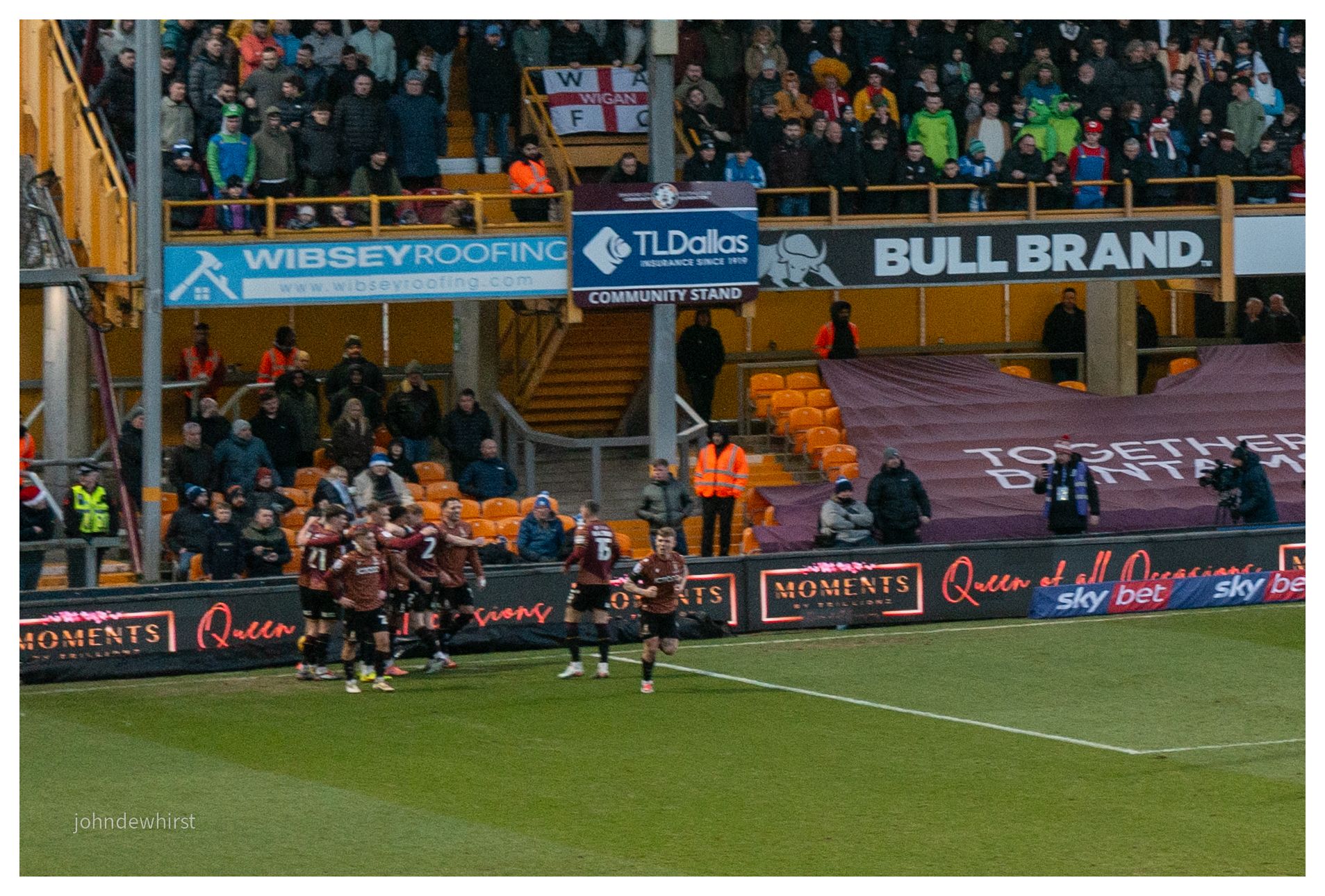
We recently explored what Alexander wants from the central striker of his 3-4-3. The role is clear: act as a target in transition, compete physically for long balls, and disrupt defenders to bring second balls into play. Press, press, press. It demands pace, athleticism and movement.
These are all boxes Humphrys ticks. Physically strong, quick and intelligent, he has the attributes to lead the line. As a bonus, he’s what you call a False 9. That means a striker who will drop back from a high attacking position into midfield or wide areas, with the aim of dragging centre backs out of position to create space for others.
It’s a new dynamic in City’s attacking play this season, a clear evolution from the likes of Andy Cook and Calum Kavanagh. It complements the playmaking strengths of Antoni Sarcevic and Bobby Pointon, who thrive when others link closely with them and are adept at making runs into the box – taking advantage of the space Humphrys creates. There is a compelling argument that the very best version of Bradford City this season has Sarcevic and Pointon wide forwards, and Humphrys through the middle.
With City’s system spreading goals across the team, the fact Humphrys is not a prolific scorer is not necessarily an issue. Humphrys typically averages 9-12 goals a season; he has nine for City so far this campaign, broadly in line with expectations.
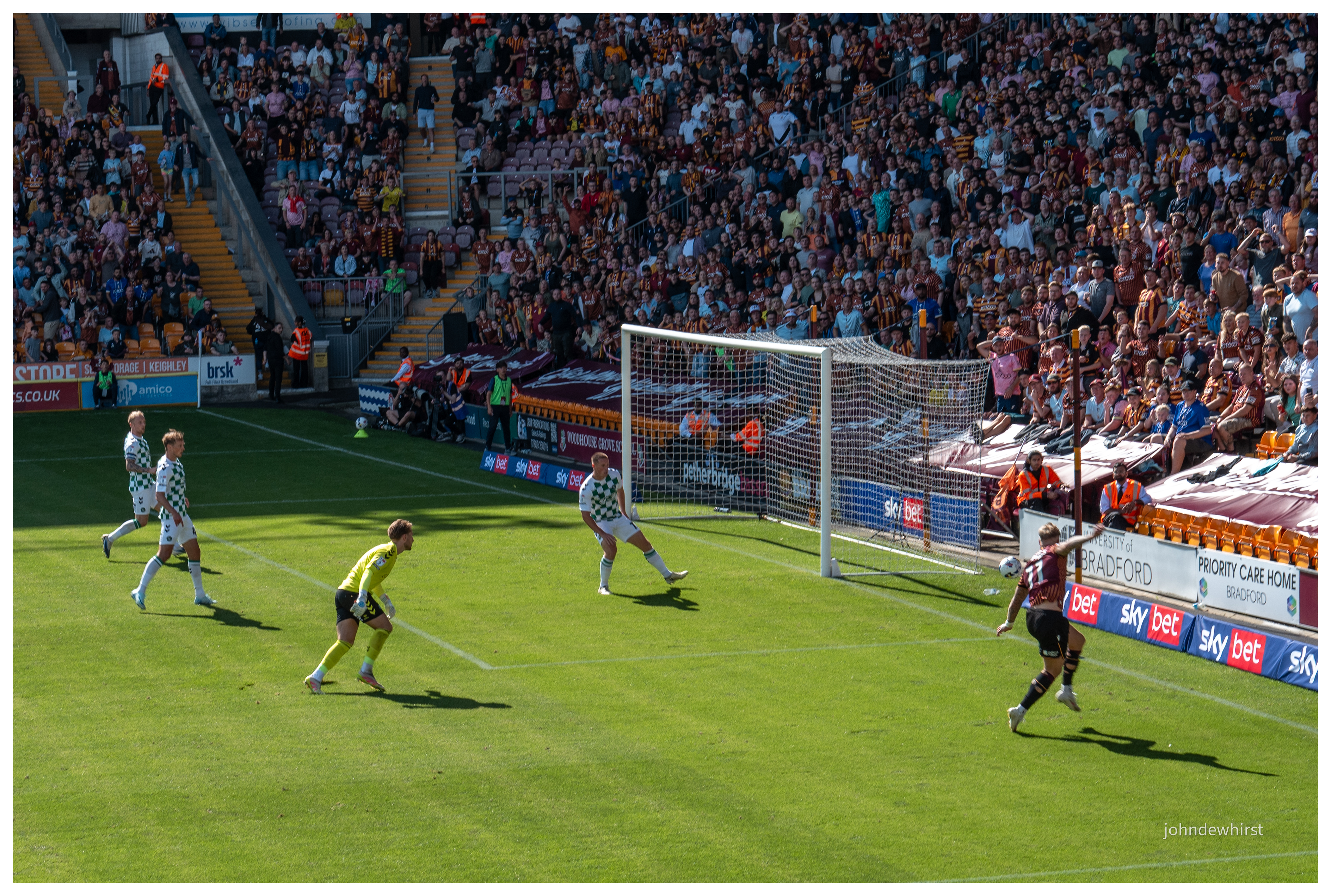
And at times it’s looked very promising. On the opening day against Wycombe, he led the line superbly and was unlucky not to score on his debut – prompting Alexander to describe him as “unplayable”.
On other occasions, the fit has been less convincing. He does not always dominate aerially, can struggle with limited space, and has found it difficult to nail down a consistent place – at times behind Will Swan, and later Kayden Jackson and Ethan Wheatley.
After scoring the Good Friday winner over Northampton, Humphrys even admitted he found running the channels “boring”. There have also been spells where he has drifted out of games and faced accusations of looking disinterested.
If the very best version of Bradford City features Humphrys up front, he’s possibly also part of the very worst version of Bradford City this season. That is when the team resorts to hoofing it forward, often after wing-backs have been doubled up and central midfield has been overrun.
Humphrys is not a conventional target man who can consistently win headers or hold the ball up. When City retreat into that more direct approach, he becomes ineffective – and, somewhat inevitably, the focus of an agitated crowd.
That’s why Alexander tried deploying Wheatley up top instead. If the 19-year-old had built on his early promise with goals and confidence, City might look a very different side now, and Humphrys may not be starting. But as Wheatley’s form dipped, Humphrys was handed another chance through the middle, before injuries disrupted everything.
He remains the best of a mixed group of performers at centre-forward. And when City play in a way that suits his more fluid, link-up strengths, they look a far more cohesive side.

Humphrys the wide player
For the first half of the season, Humphrys either played through the middle or not at all. But there were moments when he drifted wide and offered a glimpse of something different.
Against Wimbledon in August, with City trailing 2-1, he picked the ball up out wide, beat his man and delivered a low cross that Pointon converted. Away at Plymouth in December, he again moved wide, drove into the box and won the penalty that Sarcevic converted for the game’s only goal.
The question persisted. Would he be better out wide?
Alexander, however, was clear. Over the summer, he told Humphrys he saw his future down the middle, and that Bradford City would help him unlock that potential. It was a key factor in the player choosing the club.
Like a rock band ditching guitars for an experimental record, Humphrys was trying to be something different. The problem was his new audience still wanted the hits.
During the second half of the season, we got treated to hints of the potential of Humphrys the wide player. A February cameo at Wimbledon brought a goal from out wide. A month later, against Leyton Orient, he produced one of the assists of the season on the wing – weighting the ball brilliantly for Sarcevic to score. It was all very tantalising.
But they were only glimpses. A peep of sunlight through heavy cloud. Alexander was reluctant to trust him there from the start, citing concerns over defensive work and physical output. It always came back to the demands of the system.
Humphrys was not seen as the answer.
That began to shift more recently. Starting wide at Barnsley, Humphrys set up Nick Powell’s equaliser at Oakwell. Three days later, he created Will Swan’s goal in a 1-1 draw with Plymouth, again producing a moment of real quality from the flank. On Saturday against Bolton, the system was changed to 4-2-3-1 which put Humphrys on the left wing.
And yet, for all this recent end product, something still feels missing.
Why it doesn’t quite work
The race for Bradford City’s player of the season is wide open, but Pointon and Sarcevic are central to the conversation. Both have excelled in the wide forward roles, driving the team’s attacking play. They are wide forwards but not true wide players. They do not play on the touchline. They do not get chalk on their boots.
Wing-backs are equally critical. Ibou Touray, Josh Neufville and Tyreik Wright have all had spells of strong form, providing the width that underpins the 3-4-3 system.
And that is where the challenge lies for Humphrys.
He may be at his best out wide – but City do not play with traditional wingers. Their width comes from wing-backs, while the wide forwards operate inside, linking play and combining in tight spaces.
No one at the club performs those roles better than Pointon and Sarcevic.
Humphrys included.
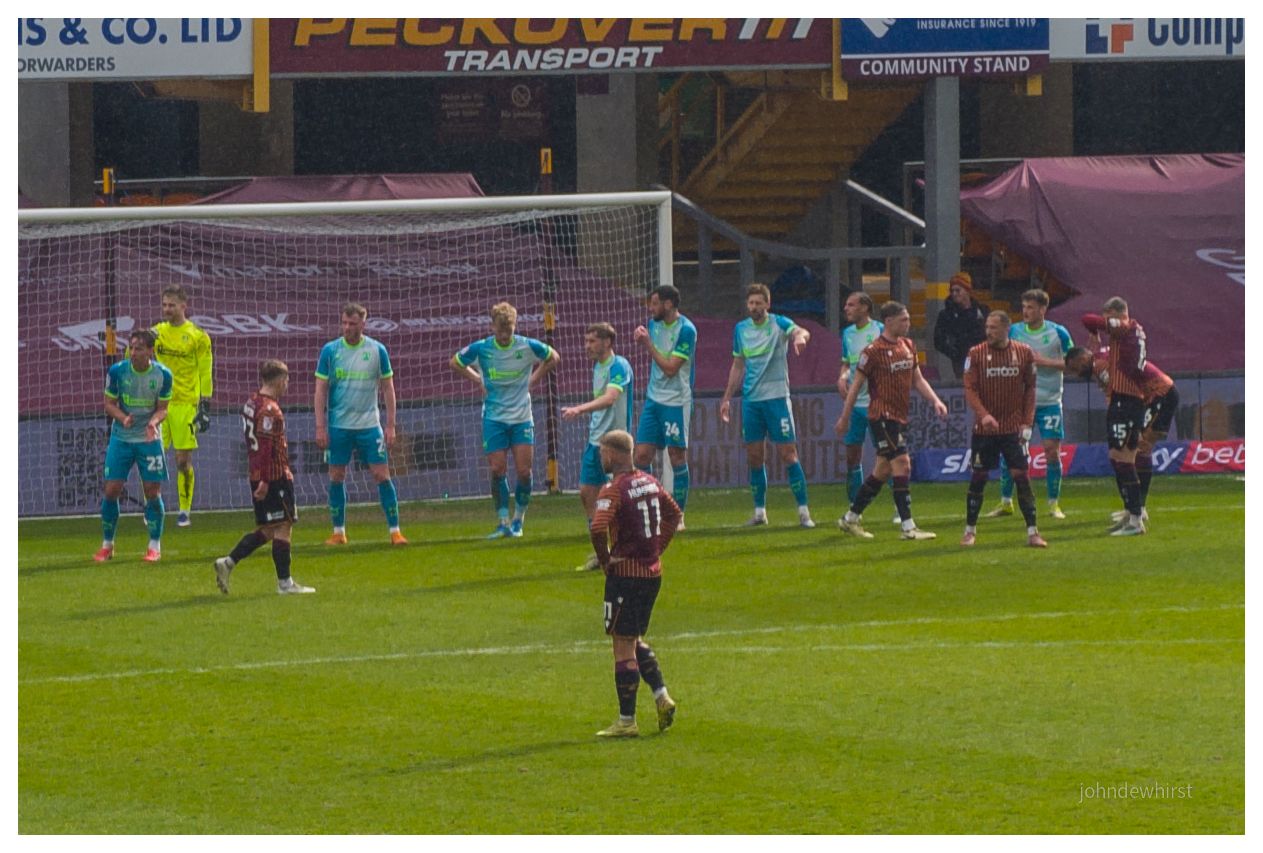
With recent injuries to Pointon and Sarcevic opening the door for Humphrys to play wide in the last few games, the limitations have been evident. On the left, he has not linked play as effectively as Pointon. His movement has not consistently supported Touray, leaving the wing-back isolated. Midfielders have struggled to find him, and the central striker has often been left disconnected.
These are not solely his failings – but they underline the issue.
What’s interesting is that, in the Barnsley and Plymouth games, City were losing and Alexander made significant tactical shuffles that put Humphrys into a truer wide position, chiefly because wing backs were abandoned for a flat back four. In a 4-1-4-1 set-up at Barnsley and 4-2-4 against Plymouth, Humphrys became a touchline hugging winger. And, wow, did he thrive.
Change the system to suit him, and the results can be spectacular.
But that raises a bigger question.
The team vs player dilemma
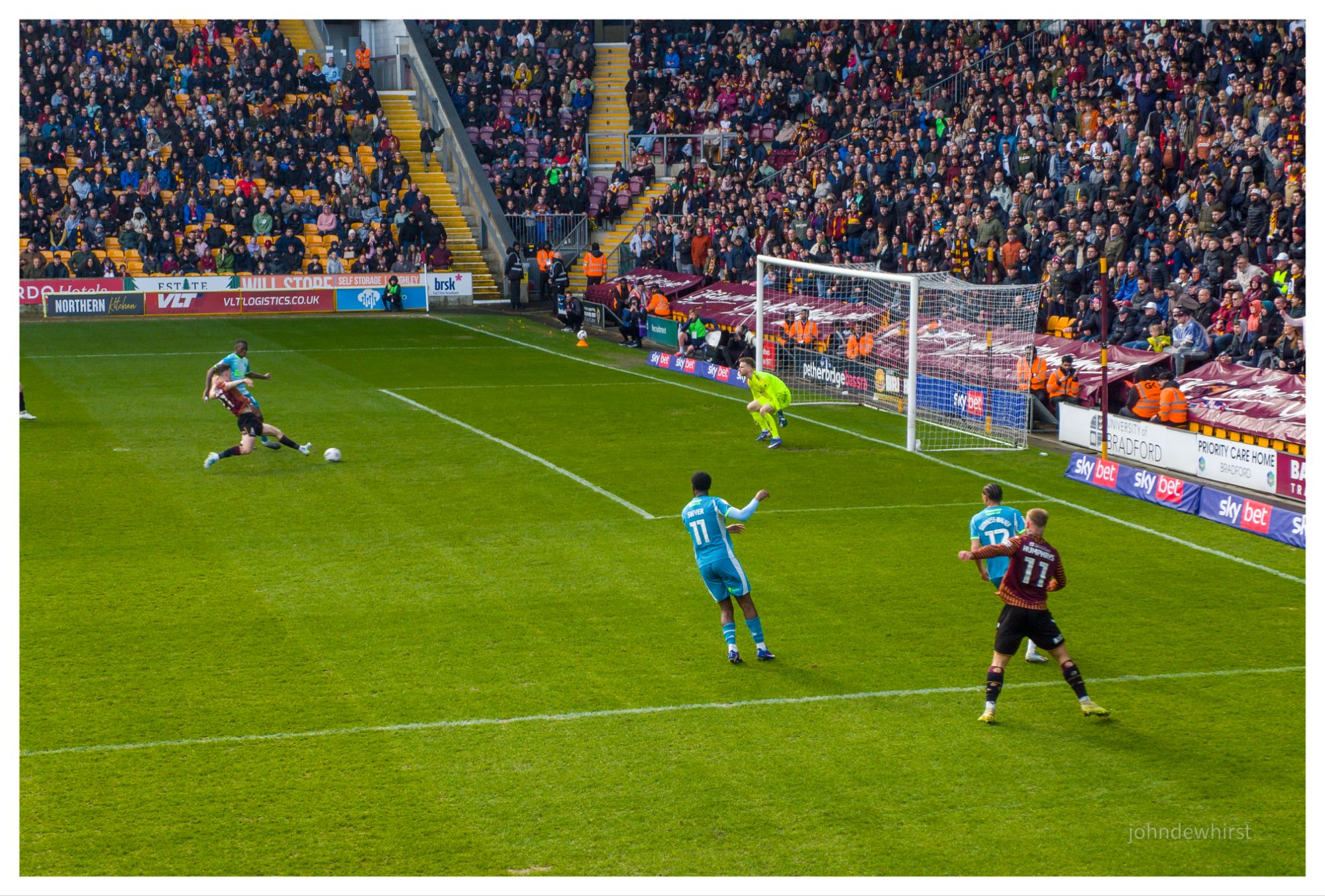
The Bolton game saw a shift of formation that was partly due to injuries and finding a way to combat the visitors’ obvious strengths out wide. It was a massive opportunity for Humphrys to prove he could play on the left wing, but ultimately he didn’t take it. There was some flashes of really good play and exciting dribbling, undermined by poor decision-making. Sadly, he didn’t offer enough to put a compelling argument forward that the team set-up should be changed to let him play this role.
Even if he had, it’s unlikely Alexander was going fully abandon the 3-4-3 that has served Bradford City so well for 18 months. He’s built the squad to play a certain way, and when everyone’s fit and firing it’s mightily effective. Exhibit A: promotion last season. Exhibit B: the current League One table.
Which leaves Humphrys in a difficult position. He may be most effective out wide, but less so in 3-4-3 a system. He lacks the link-up play of Pointon and Sarcevic. He’s brilliant, but individualistically brilliant.
Of course, it could work. But it would require that shift in shape. The 4-2-3-1 or a 4-1-4-1, perhaps, with a full-back providing cover behind a wide-left Humphrys. But with everyone fit, that likely means no place for Pointon and Sarcevic. And who plays on the right wing? And who leads the line?
Finding a role for Humphrys as a wide forward in this set up is difficult.
Not without making the rest of the team less effective.
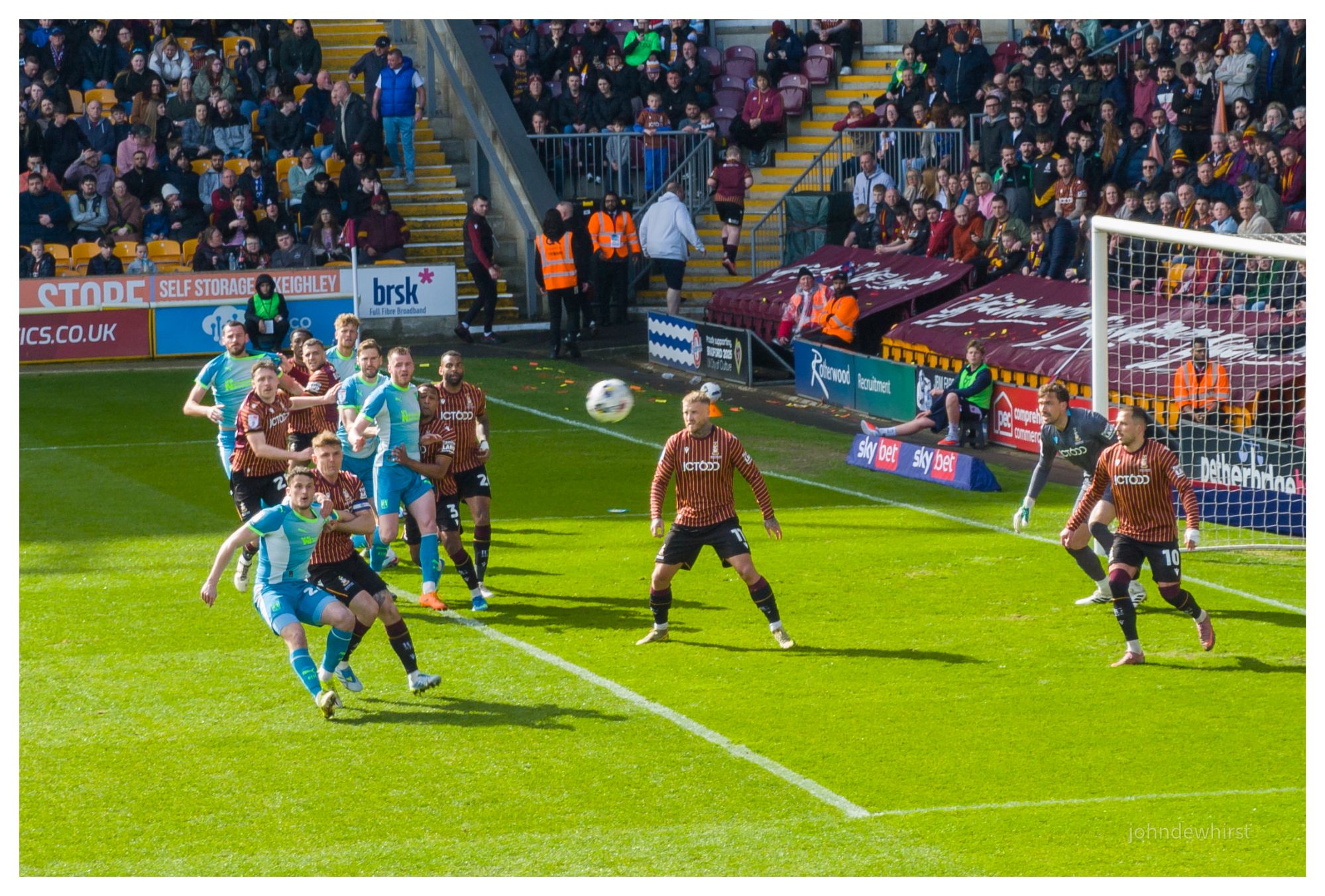
Which brings us back to Humphrys the number 9
Recent team performances have made it clearer why Alexander persisted with Humphrys through the middle. The attributes are there for him to succeed at it. The attitude is largely sound. He has contributed, and overall his season has been solid. His has 10 league goal contributions (seven goals, three assists) which is the third-highest of the City squad (Pointon and Sarcevic have 13 goal contributions, made up of 10 goals and three assists each).
And yet, like Radiohead’s Kid A era, Humphrys tries to become something new while the audience still craves Creep on repeat.[i] The version of him that felt simplest and most effective.
Ultimately, Humphrys’ best position may be one this system does not fully accommodate. And unless Alexander has reason to move away from what has brought City success, the forward risks becoming exactly what he has been elsewhere: effective on his day, but never fully settled.
[i] Personally I love the Kid A album, but I also love Creep, which probably tells you everything about my indecision over Humphrys’ best position.
Categories: Opinion, Uncategorized
 Let’s get ambition back on the table
  Championship football. Too early?
  Assessing the 2025/26 Bradford City squad #3: The frontline of the 3-4-3
  Thank you so much…have the best summer!
  widthofapost.com
I have noticed that when Humphrys does manage to get his head on a cross the end product is generally not particularly powerful, often a bit loopy and easily saved by the keeper. I would be interested to see how many headed goals he has in his career. On the other hand, he is genuinely two-footed, he can carry the ball, dribble, shrug off defenders and has an excellent step-over. The goal he created recently came after the step-over with the right, aided by a beautiful little nudge with the left to give himself the yard of space for the exquisite left-foot chip. It was beautiful to behold.
I like Humphrys, and I do think he’s genuinely tried to develop into the best centre-forward he can be, but it just hasn’t quite come together. Earlier in the season, he gave an interview where he essentially said it didn’t matter if he wasn’t scoring as long as the team was winning. That feels at odds with his more recent comments about wanting to be the one scoring goals, and how he wouldn’t have enjoyed the game as much if he hadn’t found the net.
Too often, he holds onto the ball a fraction too long or takes an extra touch when it’s not needed. There’s a sense that he wants to be the main man in a team that doesn’t really revolve around individuals. Even Pointon and Sarcevic.
It wouldn’t be a surprise if, regardless of the division, Humphrys ends up moving on again. For us it’s clear next season the centre forward position is the position with the highest ceiling of improvement.
Worth noting that we were all rightly in awe of Cissokho’s performance from the weekend but Bolton fans seemingly have similar comments about his consistency and that’s a team setup to play to his strengths.
I completely agree. The holding onto the ball too long is very frustrating. It’s as if he wants to try to draw a foul, and embarrass the opposition, than seek out a teammate in a better attacking position.
Bolton on Saturday was a clear example of that, not aided by the fact that the Bolton fans had clearly got into his head. He lost his focus, shifting to trying to shut them up than seeking out the best opportunities on the pitch. Unfortunately, it was the Bolton fans who had the last laugh.
There is clearly, undeniably, a talented player in him. He has a skillset that most in the league would envy. But accompanying it comes, ostensibly at least, a disinterested attitude, and quite a thin skin where if things aren’t going the way he wants them to, his head drops almost immediately.
Creep on repeat is worse for yourmental health than the play offs!
It looks like Stephen is a victim of modern football, where your strengths just don’t fit into modern systems. He would probably have secured a longer term contract at City under Parkinson or even before that.
Thanks, again, Jason for such a thoughtful piece. We are truly blessed to have you and the team at WOAP, be assured we don’t take you all for granted.
It feels that Humphrys time at City will be defined by “what ifs?” and “what could have beens?”.
I wholeheartedly agree with Kj’s comment about Humphrys potentially been more successful in the Parkinson era, as back then football had more room for individual mavericks. On a side note, it is unfortunate that these days people have become obsessed with the Pep Guardiola school of everyone having to benefit the system and no room for talented mavericks with individual brilliance… Some shoots of recovery with Pep now playing Cherki and Semenyo but we’ve lost so many brilliant goals, performances because of this mentality. Premier league years will be a very boring show for kids to watch in the 2030s & 2040s, when you are just watching tap-ins. Compare that with Premier league years showing seasons from the 90s and 00s with amazing goals from Georgi Kinkladze, Le Tissier, Jay-Jay Okacha, Rooney, Ronaldo, Pedersen, Beckham, Drogba,Tugay etc
Moving away from the tangent, Humphys is very talented and is the most entertaining player we have. His 10 goal contributions in the league also don’t tell the whole story, his shots have made goals too:
Wycombe at Home: He beats a man on the egde of the box, hits a shot which the keeper clumsily spills and Sarce heads it in.
Wimbledon at Home: He beats his man on the left and shoots, the keeper palms it out into the path of Pointon and he scores.
Plymouth away: Wins the penalty by beating his man and Sarce scores.
Plymouth at Home: He beats 3 people, shoots from edge of the box, keeper spills it and Swan scores.
All of the above don’t count as assists but as someone memed on Twitter/X with Swan’s goal against Plymouth it was 90% Humphrys and 10% Swan. He is the one player who can make something out of nothing and creates opportunities.
Now, do other players beat a man, shoot and make the keeper spill it, of course they do. But Humphrys is the one who does it the most, and maybe it’s bias, but I can’t recall other instances of players doing this, this season, from the top of my head; except, T. Wright shooting at Port Vale and Pointon putting in the rebound.
I agree it has been a mixed season from Humphrys, and I have been critical of him too (e.g. clinging on the ball too long, trying too hard, looking overly frustrated), but, he’s still played a significant part in what has been a successful season for us and hopefully he’ll have some more exciting moments for us in the play offs.
And if this ends up been Humphrys only season with us, it has been nice to watch a player who gets your bum off your seat at Valley Parade…
Humphrey does make the keeper save, which is good, but It would be a lot better if the keeper was picking it out of the net though! in my opinion he doesn’t have the physicality or pace or guile to play the lead striker. He likes time to get the ball down and I think we would be better served playing him wide (maybe in a rotated 3 with sarc and Bobby). Take the pressure off him to score, it has led to a bit of greed and predictability. He seems a good character and I think he could be a valuable squad player but GA needs to think a bit out of the box here.
Of course it would, I’m still waiting for him to score a piledriver from these shots! However, those shots created panic and jeopardy, and with the shots against Wycombe, Plymouth and Wimbledon he made something out of nothing. They weren’t shots where it had been put on a plate for him and he should have scored. The Plymouth one was fortuitously split and I think he should have hit that earlier. He has produced some tidy composed finishes this season (e.g. Wigan (H), Luton (A), Wimbledon (A)). But, perhaps, I have got rose tinted spectacles on!
To be honest, I’m just happy to have a divisive winger, albeit he plays as a false 9/striker, again….. I long for the days of Reidy dividing people. Some loved him and would chant “Reidy” at any opportunity whereas I remember some people going potty with him… Before Reidy there was Daley… I feel like there must have been someone between 2015-2025 but my mind is failing me… We did have Mark Marshall but he was very good in 16/17 and I can’t remember people slagging him off that much? There was Connolly in 19/20… Any other suggestions?
Humphrey does make the keeper save, which is good, but It would be a lot better if the keeper was picking it out of the net though! in my opinion he doesn’t have the physicality or pace or guile to play the lead striker. He likes time to get the ball down and I think we would be better served playing him wide (maybe in a rotated 3 with sarc and Bobby). Take the pressure off him to score, it has led to a bit of greed and predictability. He seems a good character and I think he could be a valuable squad player but GA needs to think a bit out of the box here.
Interesting article Jason. It has your name at the top but as I was reading, it was Alex Scott’s voice I could hear in my head!
It’s true that he cannot always effect the game but I like to ask whether the opposition would prefer him on the field or not. I think in nearly every case, they’d prefer he wasn’t, no defence likes a player like that, he’s unconventional, he moves them around and he’s capable of a goal out of nothing.
Maybe he would look like a better no.9 if we stopped hitting those long balls down the middle which are food and drink to league one centre halves.
I keep reading that Bradford are interested in Jayden Wareham of Exeter City. I read that he’ll be leaving, and Bradford are seriously interested.
Any truth?
I’d be very happy if it is true but aside from rumours on webpages, I’ve not heard anything concrete. Not sure if we could afford him or if he is out of contract…