
By Jason McKeown
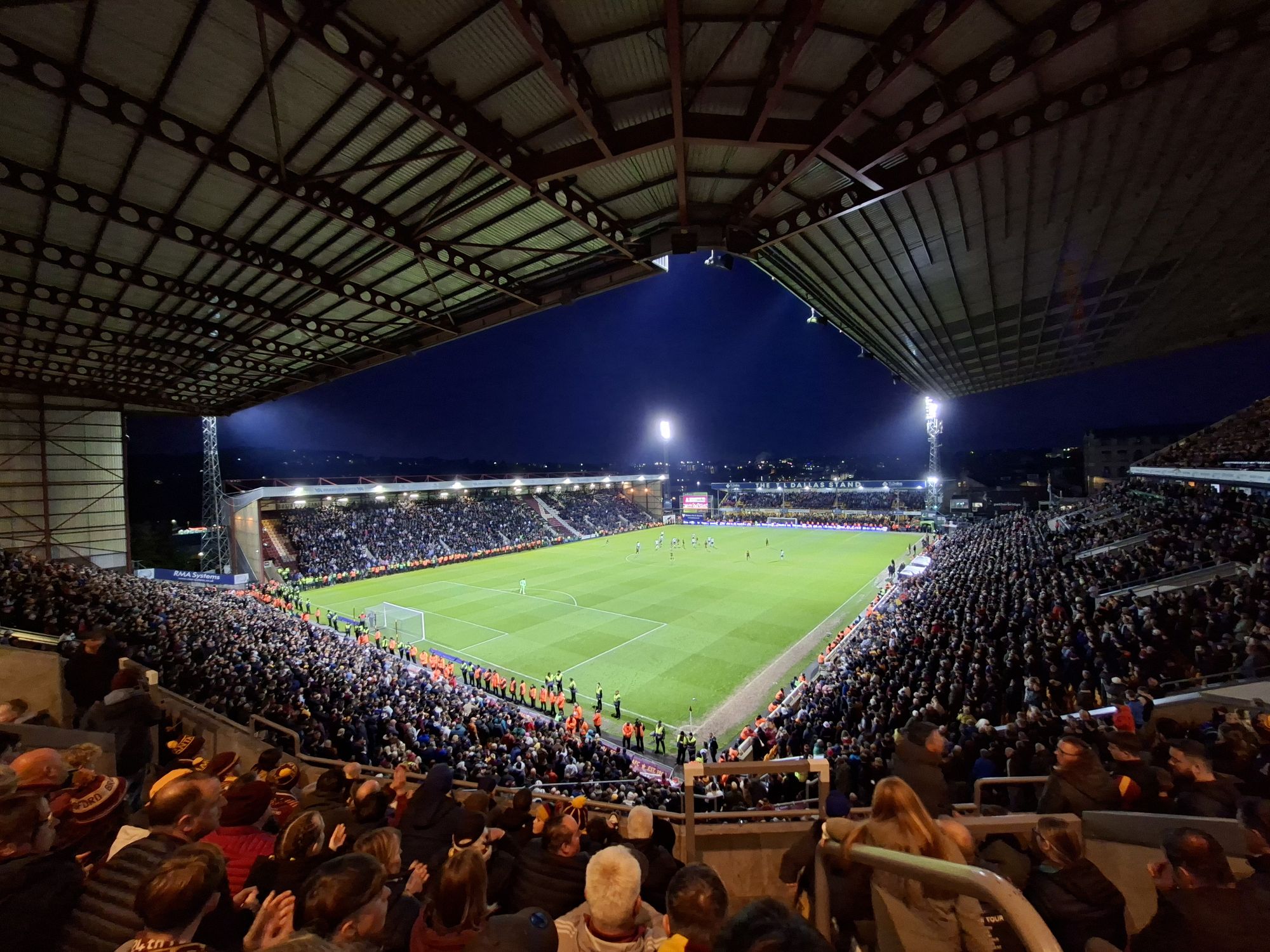
Bradford City’s titanic play-off tussle with Bolton Wanderers served as both a brilliant marker of how far the club has come and a harsh lesson in how far it still has to go.
They huffed, puffed and gave it their all. There were mitigating factors, like injury disruption to their big players. They got close. Really close. But once the dust settled, there was little doubt City were second best across the two legs. That Bolton operated at a level the Bantams must now aspire to reach.
And reaching it will not be easy.
A tougher League One awaits
As City pick up the pieces and go again, they will be part of a 2026/27 League One that already looks tough. Down from the Championship have come Leicester City – Premier League champions just 10 years ago, FA Cup winners only five years ago. Leicester have clearly been a mess, but hefty Premier League parachute payments will give them a major advantage over much of the division.
Also coming down are Sheffield Wednesday – no longer quite the basket case thanks to new ownership and the wiping away of their 15-point deduction – along with Oxford, who were slightly unfortunate to lose their Championship status and look streetwise.
Luton and Plymouth both missed out on the play-offs this time, but finished the season strongly enough to suggest they will pose far bigger threats next year. Either Stockport County or Bolton Wanderers will still be around. Huddersfield Town will surely get their act together eventually. Reading and Wycombe Wanderers showed promise. Newly promoted MK Dons will fancy their chances too.
Nothing is ever guaranteed. A year ago, League One looked just as intimidating through City’s newbie eyes, and yet Alexander’s side still smashed expectations. But the landscape ahead is undeniably tough. Leyton Orient’s near-relegation, only a year after reaching the play-off final, stands as a cautionary tale.
There is little reason to fear City will lose all their best players and recruit poorly in the way Orient did. The Bantams appear to have far stronger foundations. Even so, expectations among supporters will naturally rise next season. In what could prove to be a rising tide across the division, City may improve their squad and still finish lower down the table.
Repeating this season’s achievements would be some feat.
Progress, but with limits
City’s 2025/26 campaign will be remembered fondly for many reasons, not least its flying start. They topped the table in September after winning seven of their opening 10 league games and lost only twice in their first 19 matches as they sustained a genuine top-two push.
From that point onwards, though, the picture became less convincing. They lost 11 of their final 27 league games and won only three of their last 12 matches (including the play-offs).
It would be unfair to attribute their top-four finish to a fast start alone, but there is an uncomfortable truth that City only sporadically rediscovered the levels they produced early in the campaign. What followed became more attritional. Still commendable. Still impressive. But not quite at the same standard.
In their opening 17 league and cup matches, City scored two or more goals on 12 occasions. Across the remaining 38 games in all competitions, they managed it only nine times – and they never again scored more than twice in a match.
That is a trend they must reverse if they are to repeat this season’s success.
Who stays and who goes this summer?
This inevitably leads to questions over the make-up of the squad for next season. 11 of the current squad are out of contract this summer, and their fates will be announced over the coming days.
Neill Byrne, Andy Cook and Clarke Oduor – all currently out on loan – appear likely to depart. Lee Evans, who has started just three times since arriving in January, may also move on. Ciaran Kelly has played only a single minute since early February and looks unlikely to be offered new terms. City hold a one-year option on back-up goalkeeper Joe Hilton, though may decide against triggering it. Promising defender George Goodman faces an uncertain future. Nick Powell? Maybe, maybe not.
That leaves Antoni Sarcevic, Aden Baldwin and Tyreik Wright – three players most of us will be desperate to retain.
Wright and Baldwin have really turned around their standing amongst fans and blossomed into some of the club’s biggest talents. Sarcevic remains the big moment talisman, who commands huge affection from both the stands and his manager.
Then there are the January loanees: Paul Mullin, Ethan Wheatley, Harrison Ashby, Joe White and Louie Sibley. Collectively, they disappointed, and it is difficult to imagine any of them returning next season.
Their struggles – particularly when contrasted with the impact of Bolton’s loanees – serve as another reminder of the recruitment standards City must now strive to match.
The January window problem
Recruitment has inevitably drifted back under the spotlight after a disappointing January window. Kayden Jackson was the only mid-season signing to truly excel. Indeed, Alexander omitted every other January arrival from his final three matchday squads.
Mullin did not even make the bench after the Stevenage game. Wheatley last featured against former club Northampton on Good Friday. Ashby was never trusted again after a difficult substitute appearance against Barnsley. Sibley virtually disappeared after being withdrawn at half-time against AFC Wimbledon in February. White was not seen again after the humbling at Lincoln.
In the end, the mid-season recruitment did not jeopardise City’s play-off finish. But only Jackson contributed in the crunch games against Bolton, and even he struggled to make any impression over the two legs. When everything was on the line, Graham Alexander hasn’t felt he could trust the majority of those who were supposedly brought in to strengthen what he had.
In the club’s internal post-mortem of the season, they must surely explore what happened here – and what they can do differently.
Perhaps City’s first-half overachievement caught the recruitment team off guard in terms of how to improve the squad. More realistically, however, the calibre of player required at the top end of League One was probably beyond the club’s financial reach – particularly in the inflated January market. Unable to afford prices on the premium aisle, City were left searching the reduced section instead.
Alexander’s methods may also have played a part.
An announcement regarding another pre-season trip to Austria feels likely in the coming weeks. Alexander places huge emphasis on those camps – driving fitness, tactical intensity and squad cohesion. City’s explosive start to the season reflected how thoroughly prepared they were.
But perhaps that also makes it difficult for players arriving midway through the campaign to adapt quickly enough. The tactical demands, fitness levels and relationships within the squad are already deeply embedded by that stage. We got a glimpse of this in the January of the season before, when mid-season arrivals George Lapslie, Tommy Leigh and Michael Mellon similarly found it hard to find their feet.
And there must also be a tough conversation about how on earth City got into the position of signing a bunch of players in January and not playing them. Is it the recruitment team’s fault for making poor recommendations, or should Alexander have been reasonably expected to play them more? We look at the standard of Bolton’s loanees with envy and wish we had such good contacts, but it’s not a good look to bring in the likes of Sibley, White, Ashby and Wheatley and quickly discard them. It won’t encourage other clubs to loan their best young players to Valley Parade.
It’s something to consider.
Building the next squad
The encouraging aspect heading into this summer is that David Sharpe and Stephen Gent have a strong track record during the off-season. The recruitment work ahead of both the 2024/25 and 2025/26 campaigns was largely excellent. They will no doubt have prepared plans for both Championship and League One football. It is the latter blueprint that now matters.
If they do as well as they did last summer, City will be in business. But it won’t be easy. They are shopping in a different market, one that comes with larger price tags. Success will require either matching clubs with superior financial muscle or uncovering hidden gems before others do.
The division’s newly approved financial regulations may at least help narrow the gap. Clubs will now be restricted to spending 50% of turnover on wages, while owner injections are also more tightly controlled. Relegated Championship clubs such as Leicester are permitted slightly greater flexibility at 65%, but even that has been reduced from the previous 75% cap.
It all limits the extent to which wealthier rivals can outspend clubs like City.
This summer’s recruitment should focus not simply on replacing departures, but on genuinely improving the squad. That inevitably places some current players under greater scrutiny too.
Sam Walker enjoyed a good season without being flawless. He turns 35 next year and has only one year remaining on his contract. Will City bring in serious competition for the number one shirt?
At the other end of the pitch, the need for more goals feels obvious. Stevenage were the only top-half side to score fewer goals than City. A reliable number nine must surely rank near the top of the shopping list.
City ended the second leg against Bolton with four strikers on the pitch, yet questions remain over all of them.
Stephen Humphrys endured a disappointing second half of the season, scoring just once after February. The ongoing “is he a striker or is he a winger?” debate eventually saw him deployed wide, where things never fully clicked.
Humphrys remains one of those classic “on his day” players – capable of brilliance, but unable to sustain it consistently. And he doesn’t stick anywhere for too long.
Will Swan and Jackson are both likely to remain, but neither possesses the track record of a prolific goalscorer at this level. Something more is needed.
Finding it will not come cheap.
Keeping the core together
Just as important is ensuring City avoid a Leyton Orient-style collapse by losing their best players.
Jenson Metcalfe was linked with interest in January and speculation will surely intensify again this summer. Bobby Pointon and Josh Neufville may also attract attention. All three are outstanding young talents who could one day generate significant transfer fees for the club. But you do feel their careers are best served playing regular football at Valley Parade at this point. A big move might come too soon for them at this stage.
And while attention naturally falls on the playing squad, Alexander himself may yet attract admirers elsewhere.
He’s done an outstanding job. He is loved by supporters and the City hierarchy. He’s built something really special and is unlikely to be tempted away from it. But his achievements at Valley Parade will not be going unnoticed, and there are other clubs currently with a vacancy. Not least Burnley, where he is deeply loved.
I’ve written before that City’s record of keeping managers after a play-off defeat is terrible. Four previous Bantams’ play-off heartaches, four changes in the dugout within the next seven months. Alexander looks better placed that Terry Dolan (1988), Stuart McCall (2017) and Mark Hughes (2023) to buck that trend, but there might be times ahead where the groundswell of public support he currently enjoys may be tested.
As fans, we would be completely foolish to drive Alexander out of this club anytime soon. There’s no such thing as a free hit in football, but his future standing should not centre on whether he can overachieve in the manner he managed to this season. Alexander is often compared to Phil Parkinson and similar lessons about the now-Wrexham manager’s tenure at Valley Parade should be applied here too.
Alexander has earned enormous credit.
The story of how he has transformed Bradford City is not one that should be rushed towards its ending.
No reason to fear the future
This all sounds a bit doom and gloom, and that’s unfair on everyone at City. It’s true that beaten play-off teams often struggle the year after. That there are reasons to worry City could follow suit. But then a year ago the Bantams went into the 2025/26 season widely tipped to struggle. Consolidation looked our best realistic hope.
Alexander, Sharpe, Gent, Ryan Sparks, Stefan Rupp and the players completely exceeded expectations.
There is no reason they cannot do so again.
It’s why we should not fear the future. Should not fret that this is the ceiling and it will all go downhill from here. But at the same time, we do need to be measured in our ambitions. To recognise the tough landscape the Bantams are operating in. To understand that even a step backwards next season could still prove a step forwards.
The club is in the best shape it’s been for almost a decade. With the arrival of American sponsors, a further rise in season ticket holders for next campaign, and a burgeoning reputation, there’s every reason to believe more great times might lie ahead.
If City can continue building on the foundations already laid – and maintain the powerful unity forged between club and supporters – they have every chance of eventually reaching the level they witnessed from Bolton, and of ultimately taking that long-awaited step back into the second tier.
Categories: Opinion
 What Graham Alexander’s exit reminds us about being a football supporter
  The Bradford City that Graham built
  The end of something special as Graham Alexander leaves Bradford City
  Have Bradford City built something bigger than Graham Alexander?

Good article trying to foresee the future season. Retaining a good squad from this season is a must. And surely off loading players not required. Also the owners proving to GA that his future is at the valley. As I’m sure he has created a lot of interest from other clubs higher up the divisions? If we can get this right, this makes an exciting time down at the valley for all the supporters for next season. We’ll be full of optimism in August if we can pick up where we left at the end of last season. Learning from last season in this hard division and once again maintaining consolidation is our main target to build on these foundations for the future.We’ll be there with our full backing in the new style kit (open to divided opinions?). Up the Bantams!
A very good article. I really think that last season was our big chance as next season looks a lot tougher. Your most significant sentence is “City may improve their squad and still finish lower down the table.”
I do feel that you slightly understated what frankly was a shocking January window where, with the aim of improving the squad, we actually weakened it.
Lastly I question whether we have any strikers at the club? Looking at their previous playing histories we have wide players who City tried to make into strikers.
The challenge for GA (and wider recruitment team) is working out how he improves this team without disrupting what he’s built this season. Every member of the starting XI has performed well, but it does feel like we’ve got the absolute maximum out of them. While you’d be happy to see all of them starting next season, there’s also questions in each department.
Walker was brilliant in the first half of the season but going from being at the top of the data charts he hasn’t kept up those high standards. Has he been carrying an injury as Mark Bowers suspects? We have defended brilliantly and so perhaps Walker has hit his ceiling for us.
The back 3 whoever has played there has been a strength. Joe Wright, possibly our best defender, can’t use the ball as well as others, and in a team that weren’t conceding anyway is Pennington a better option. Touray’s best position in this system seems to be the same as Tilt’s and both have had excellent seasons.
Our wing backs have starred at points this season. Wright has become integral in the way he links up with Pointon.
Power/Metcalfe again were both player of the season contenders but only 2 goals between them. Do you lose the defensive structure and solidity that has served us so well by sacrificing one for a Pattison type.
Sarce/Pointon can’t really do too much more, while it feels like Pointon will only improve, and Sarce seems like a fine wine, we’ve struggled to replace them when they’ve been injured. Can we find better depth?
Jackson has impressed but if he the centre forward we need, if he isn’t what’s his role in this team? Will we see a change of system? Do we generally create enough chances for any centre forward.
Very interesting summer ahead and I believe we’ve the right team in place to answers. As pointed out in the article we absolutely must show patience.
Very perceptive: we may significantly strengthen but find life harder. The league is likely to be stronger. From somewhere we need to get hold of a goal-scorer. If it is hard to find at this level imagine how difficult – and expensive – it would have been had we been promoted. I personally believe we would have gone up had we had one, playing centrally and putting himself about. Don’t suppose I will be commenting again until next season so may I sign off by commending Jason and his fellow writers for another season of outstanding work. It’s one of the very few decent things online that is not infested with adverts and maintains a high standard of reporting and debate.
Regarding finding a striker one thing has always surprised me. Why we don’t import players from say Bundesliga 2. Surely Rupp must have contacts who know German scouts? One would think that a player out of contract there might relish the opportunity to come over here? BTW all Bundesliga 1 and 2 games are live-streamed for free on YouTube so I get to see some handy strikers. They are much better than Kai Bruenker although he was a trier.
It is quite noticable that many teams that come to VP play attractive, pass and move football, where we rely and play far too much hit and hope stuff. As such our usually lone striker, whether it be Humphrys or Jackson are seen to be chasing a lost cause. Not only can the fans see this and know that it is coming, but the opposition now do too and easily counteract it. Please let’s see better, attractive football next season with the ball played in the floor more – that style is how football should be played and got us in the play-off positions earlier in the season!
Biggest priorities for the recruitment team this summer:
I know the above largely depends on budget and competition for players. I’m also conscious that we don’t rely on a 20+ goal a season striker in our system, we need a lead forward player who can do multiple things (e.g. drop back, build up play, drive the ball forward, press) and I think at our budget level, it’d be difficult to find a 20+ goal season striker who can do all that as well.
I have faith in our team to bring in good players and I hope our first signing is a statement signing like Sarcevic and Power were.
faier enough but these “20 goal a season” strikers are rare. There’s only two in league one with 20 goals – Dom Sibley who kept relegation threatened Orient up and Kyle Wootton at Stockport. Stamping feet and demanding we sign one as some supporters demand is not as simple as it sounds.
My point as well, I know they’re difficult to find and I think we have a system that shares the goals around well; meaning we are less dependent on that 20+ striker.
My main point is we need some more clinical players who can put chances away, as we should have scored about 12 more goals than we did, given the chances we made.
I think for us to go up a level we need some more players who can score 5-8 goals from the bench.
I’ve previously said that we need a change of system, either that or a complete tactical change with same system, ie getting the ball down and playing rather than long hopeless balls to try and get our wing backs into the game. I would favour a 4231 system with Neufville playing right of the 3 and Wright on the left. Pointon or Lapslie through the middle.
I’m gonna be controversial here…. As much as we love Sarcevic, I do think that he should possibly move on, as he looked leggy against Bolton over the two games and another season pushing for the top of League One might just be too much. Better to go out as legend than a has been a further season down the line??
Of those out of contract, I’d offer Wright, Baldwin and Hilton a new contract, or look to bring in a new number one, if Walker would accept being a back-up. I’d also move Humphreys and Swan on, as Swan isn’t top of league one standard, and Humphreys clearly showed he wasn’t interested when he came on against Bolton, which was surprising, despite his recent interview.
sarcevic is staying as he’s activated a clause in his contract. I said he could possibly move on, but I am happy he’s staying.
I agree with your original post. It would have been interesting, if the option on Sarcevic had been in the club’s favour, if we’d have triggered it. He’s had a great career in the lower leagues but he looks like he’s struggled for fitness this season and his low key performances in the play offs were probably due to him carrying another injury. He did well to finish joint top scorer but I fear we’ve seen the best of him as his age, and wear and tear, may have caught up with him.
Those were my thoughts exactly. But he’s a likeable guy, with plenty of experience to offer in support to younger pro’s.
I don’t want to sound negative but I think next season will be tougher and probably more likely to end up mid-table which I don’t think is a bad thing. We haven’t the resources currently to go up and I think we’d be better having a couple of years consolidating. Let’s hope we can get some outside investment in the next couple of years because I think if we have ambitions of going up we are going to need it.
You’re not negative, merely realistic. We should use the time to further build and develop a nucleus of promising younger players, who are going to improve and naturally reach the next level in the pyramid, rather than experienced players who have passed their peak. Whichever the division, speed of movement is key and it was evident in the play off games, without mentioning names, that this was deficient in certain areas. Bolton had it, but with some of their loanees.
With regards the elusive goal scoring striker, there must be young players struggling to get game time with higher division clubs, who could do a job for us, especially as we’re still in League One. We tried it with Wheatley and you would have expected someone coming from Manchester United to have shown his pedigree, which was, sadly, lacking in his case. We shouldn’t allow that to deter us and, if funds don’t allow the signing of an established name, surely the perceived progress we’ve made makes us an attractive proposition for one of the top clubs to use us to further develop one of their talented youngsters.
I do feel, however, we are somewhat hampered in the fact that the first team coaching staff doesn’t include anyone with practical playing experience in a forward role. We have a goalkeeper coach, responsible for the two or three goalies in the squad, but no specialist member of staff for first choice, and back up, forwards.
The issue with Bradford is that they are very predictable as the long ball seems the main attack weapon. That can only take you so far they need to go back to the football played under Parkinson.
Three thoughts:
First – seems a bit sad to see Cooky on the departure board with barely a trumpet of acknowledgement.
Second – is Chris Lucketti the most under-appreciated person at the club? Just look at his dynamic with the players after a match.
Third- I would offer Ashby a contract. Definitely a player in there, young players improve with match practice, and if he produces more passes like that one at Wycombe…?