
By Jason McKeown
There is a moment at the end of the 1999 BBC documentary about Bradford City’s promotion to the Premier League, Valley of Dreams, where a packed-out Centenary Square is celebrating the Bantams’ triumph. Geoffrey Richmond poses for photos in front of a railing, behind which fans are hugging and patting him on the back.
Richmond has a big, beaming smile and rightly so – he’d just delivered on a five-year promise that many had scoffed at him for making, and in doing so completely changed Bradford City. Supporters reach out to touch him with the sort of adulation usually reserved for star footballers. And in a sport where the chairman is so often the bad guy, it is a striking moment.
These were not normal scenes. And these were not normal times.
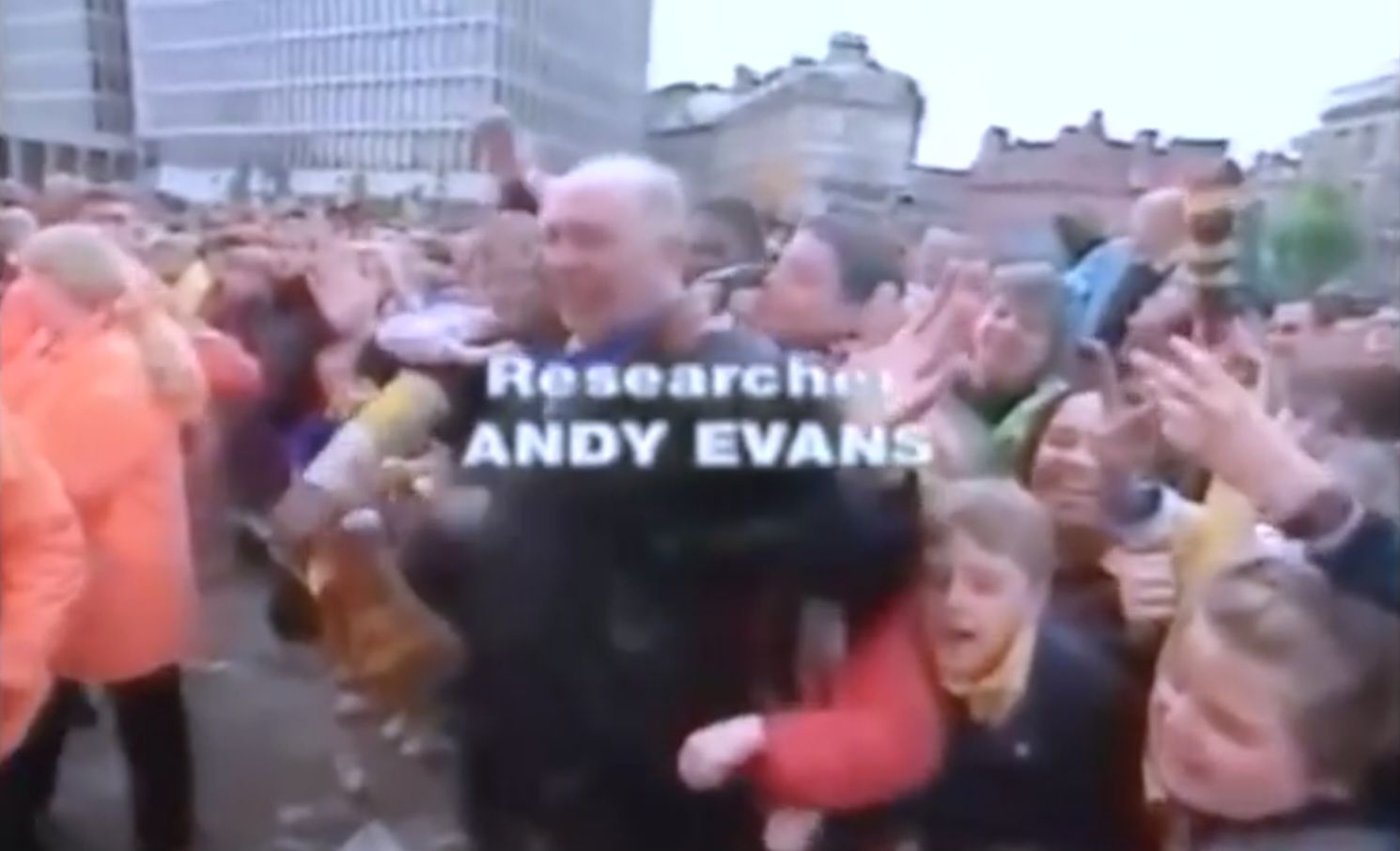
Following the sad news at the weekend that Geoffrey Richmond has died, it is that joyous image of the former City chairman that flashes through my mind. It is a moment in time that has now become timeless. The extraordinary rise of Bradford City, from forever middling in the lower divisions to taking their place at the top table of the Premier League, was down to many brilliant people but would not have happened without Richmond. He was the leader, the visionary, the architect and the driving force behind the transformation of the club.
It is no hyperbole to argue that Richmond is one of the most influential figures in Bradford City history. Over eight years in charge he took the Bantams on the most extraordinary of rides. His legacy – in good ways and bad – continues to shape City, even two decades on. “There’s only one Geoffrey Richmond”, we used to sing. And there really was.
To understand Richmond’s impact, it is worth going back to where it began. He started out working life selling encyclopaedias door-to-door – which helped him to hone his legendary sales ability – before then owning a lighter business and buying Scarborough Football Club. He took the North Yorkshire club into the Football League for the first time in history, but in time grew impatient with its limited potential and the fact Scarborough fans did not always warm to him. He craved a football club that would match the size of his ambitions, which is what led to him setting his sights on Bradford City.
A curious swap deal – Richmond buying the Bantams from David Simpson, who took Scarborough off his hands – saw him take the reins. A few weeks later, he stood up at a supporters’ club meeting and said the club would be knocking on the door of the Premier League in five years’ time. Some chuckled. Others rolled their eyes. It all seemed far-fetched.
There is, perhaps, something necessary about looking faintly ridiculous when proposing genuine change. Richmond’s great strength was that other people’s scepticism never seemed to embarrass him into lowering his ambitions.
After all, City were languishing in mid-table of the third tier, a place they’d been stuck for years. In the 1980s, there was a rise up the divisions and a push for top-flight football that narrowly failed, quickly leading to relegation and more mediocrity. And before that, City had spent decades languishing in the bottom divisions. The 1910s heyday was a distant dream.
Bradford City were a perennial lower-league club. On a par with the likes of Chesterfield, Rotherham and Mansfield. The idea they could rise up to be in the Premier League was fanciful.
He recognised a potential in Bradford City that few others did and completely shifted how we see ourselves. He saw the vast population of Bradford and its surrounding areas. He saw thousands of people who might come to Valley Parade if only they were given something to believe in. He saw a football club that could be much, much bigger than it was. And he set about trying to realise it.
He doused Bradford City with ambition. Sometimes he seemed to will the club forward through the sheer force of his personality. He worked ferociously long hours, demanded the same intensity from those around him, courted publicity and constantly pushed for more. Managers came and went. Transfer records were repeatedly broken. Valley Parade was transformed. Crowds grew.
Richmond refused to accept Bradford City’s place in the footballing order.
Perhaps Richmond’s greatest sales job was Bradford City itself. He persuaded supporters to believe the club could be bigger, investors to believe in its potential, and a city that had grown accustomed to lower-league football to back its football club again.
Not that Richmond’s arrival immediately produced success. He inherited Frank Stapleton as manager. Stapleton was the first to discover just how demanding his chairman could be. Richmond expected his managers to match his intensity, including through lengthy daily meetings.
Stapleton was sacked. His experienced replacement Lennie Lawrence also clashed with Richmond and eventually departed in 1995.
It was the appointment of rookie manager Chris Kamara that proved transformative. Richmond would come to see the attraction of giving ambitious young managers their first opportunity: they had something to prove and were more willing to accommodate a chairman who wanted to be heavily involved.
With Kamara, everything finally began to move.
He inspired City to promotion that season, thanks to a late charge to the play-offs, an astonishing semi-final turnaround against Blackpool and a one-sided victory over Notts County. Some 40,000 Bradfordians had travelled to be part of City’s first-ever appearance at Wembley. Richmond’s faith in the club’s potential support was starting to be vindicated. Here were tens of thousands of people travelling to watch the supposedly limited lower-league club he had insisted could become something more.
City found it tough going in the second tier, with Richmond encouraging Kamara to embark on a range of Bosman signings from around Europe, with mixed success. Transfer records continued to be broken and City survived relegation on the final day. But a promising start to the following season gave way to another decline, Richmond lost patience with Kamara. In came Paul Jewell, and another big step forward followed.
The switch from Kamara to Jewell was perhaps the clearest example yet of Richmond’s relentless ambition. City were doing perfectly well under Kamara. His departure shocked the football world, with Richmond even going on national radio to strongly reject suggestions from David Mellor that Kamara’s skin colour had been a factor in the decision. Many City supporters questioned it too, before Richmond characteristically faced them at another supporters’ forum and argued his case.
There was no crisis forcing Richmond’s hand. But by then, simply establishing Bradford City in the second tier wasn’t enough. He believed there was another level to reach.
History would prove him right.
In Jewell’s first full season, City earned promotion to the Premier League. Richmond had encouraged the Rhodes family to invest in the club with him and persuaded them to fund a significant transfer push that paid off handsomely. The 1998/99 season was truly special, as the team Jewell built shook off a terrible start and finished in the second automatic promotion spot ahead of Ipswich. After a 77-year wait, Bradford City were back in the top division. Richmond had delivered on his promise.
The first year went pretty well. It was a totally different financial ball game. City found it tough going, but they never gave in. When David Wetherall headed home a final day winner over Liverpool to seal Premier League survival, Richmond went as far as organising an open-top bus parade.
And as he waved to the crowds from the top deck of the bus, it was difficult to imagine how things could have gone any better.
The football story was remarkable, but Richmond had changed far more than the division Bradford City played in.
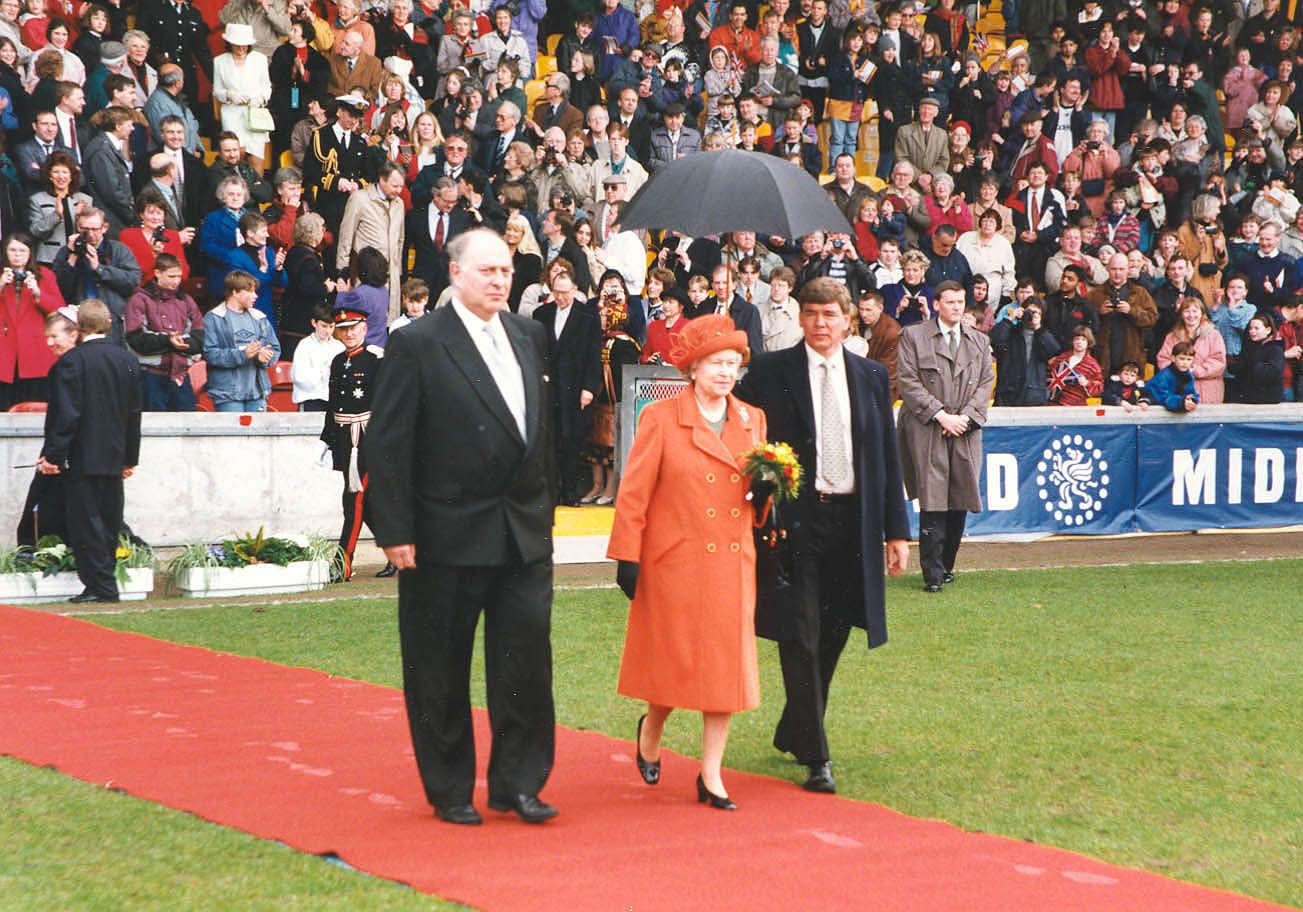
Valley Parade had been transformed. Attendances had quadrupled. Huge occasions became almost routine. The Queen came to open the Midland Road stand. Richmond would telephone supporters who had written to him and dominate fans’ forums with the confidence of a man who always seemed to have a plan.
Everything about Bradford City felt bigger.
And perhaps the biggest transformation of all was in the heads of the people who supported it.
Richmond had arrived at a club conditioned by decades in the lower divisions and told everyone they were thinking too small. By the summer of 2000, Bradford City had beaten Liverpool to stay in the Premier League and he was waving from the top of an open-top bus.
And if Richmond had decided to call it quits during that summer of 2000, there’d probably be a statue of him outside Valley Parade right now. Maybe a stand named after him too. He’d have been welcomed back time and time again.
But the quality that had driven Bradford City so far was about to carry it somewhere very different.
Perhaps the difficulty was that Richmond had spent so long being proved right. Every time Bradford City appeared to have reached its natural ceiling, he had pushed against it and discovered there was another level beyond.
Richmond had never been interested in accepting limits. That refusal to settle had taken City from the third tier to the Premier League. After one extraordinary season of survival, he wanted more.
This time the ambition became overreach.
His increasingly strained relationship with Jewell finally broke and the manager departed. Chris Hutchings was given his first managerial opportunity and Richmond sanctioned an extraordinary summer of spending designed to establish City in the Premier League.
Benito Carbone became the symbol of it. The Italian was a footballer of a calibre Bradford City supporters could scarcely have imagined seeing a few years earlier, but he arrived with a contract that the club would struggle desperately to escape when things went wrong. Other expensive signings followed. City even entered the Intertoto Cup in pursuit of European football.
The gamble failed spectacularly.
Hutchings lasted only 12 league games and City were relegated. Jim Jefferies arrived but couldn’t halt the decline. Players were sold as Richmond tried desperately to reduce costs, yet the problems went much deeper than the playing squad.
The transformation of Valley Parade had come at a cost too. The new Main Stand was mortgaged, many of the club’s fixtures and fittings were leased and financial commitments had been made on the assumption that Bradford City could continue operating at a level their income could no longer sustain.
The collapse of ITV Digital made an already perilous position worse. In 2002, Bradford City entered administration.
Richmond would famously describe the cause as “six weeks of madness”, referring to that extraordinary summer of spending two years earlier. He’d fallen victim to hubris and, whilst the decisions were reckless, on some level you can understand how it happened. Here was a man who had made brave call after brave call and repeatedly been proved right. Each time he pushed against what seemed to be Bradford City’s natural limits, another barrier had fallen. Perhaps eventually he came to believe that he could do no wrong.
The club had grown too far, too quickly. And when it went backwards on the field, it was saddled with costs it couldn’t sustain.
The man who had made Bradford City dream bigger had ultimately allowed it to grow beyond what it could afford.
For Richmond, the damage to his standing was huge. Many supporters felt betrayed that the spending under Richmond had left the club in such a desperate position, particularly given the substantial dividends he had received during the more successful years. He initially tried to stay on, but after receiving a hostile reception at a pre-season friendly against Middlesbrough, and unable to put in the money needed to rescue the club himself, he walked away.
It was a desperately sad end to a remarkable relationship.
Richmond briefly surfaced at Leeds United and would later insist that his heart remained with Bradford City. But the man who had spent eight years seemingly everywhere at Valley Parade disappeared from the club’s life almost completely.
As far as I am aware, he never returned.
On several occasions I tried to contact Richmond for an interview, for Width of a Post and for books I was writing. I wrote to his business and his cricket club. I asked people who might know how I could reach him.
I never heard back.
I always thought that was a shame. I really wanted to hear what he made of his tenure. Richmond’s place in Bradford City history has never been easy to settle. To describe him simply as either hero or villain misses the point.
Both sides of his legacy are real.
Bradford City would not have climbed from the third tier to the Premier League without his extraordinary ambition and drive. Equally, decisions made under his leadership helped to bring about the financial catastrophe that followed.
For better and for worse, Bradford City would not be the football club it is now without Geoffrey Richmond.
For most of his time at Bradford City, Richmond’s refusal to accept the club’s limitations was his greatest strength. The tragedy is that, ultimately, it became his greatest weakness too.
I’ve often wondered how much Richmond continued to follow Bradford City after 2002.
Did he look at us struggling near the foot of League Two and feel sadness or perhaps even guilt at how far we’d fallen? Did he watch those extraordinary cup victories over Arsenal and Aston Villa in 2012/13 and feel a burst of pride when they went to Wembley for a major cup final? Was he watching Match of the Day when City beat Chelsea in 2015?
And what did he make of the remarkable Valley Parade crowds of recent seasons? Did some part of him look at those stands and feel vindicated?
The physical legacy of Richmond is obvious every time you walk into Valley Parade. Perhaps the psychological legacy is even greater. Bradford City supporters no longer seem willing to accept that the club’s natural place is in the lower reaches of the Football League.
Because on that, surely, Geoffrey Richmond had been proved right.
Bradford City could be bigger.
If you were a supporter who lived through the Richmond years, you will have your own view of them. You may look back with anger at how it ended, or wonder what might have happened had things gone differently. But ifs, buts and maybes cannot change what came before or after.
Richmond completely altered how we see Bradford City.
Sometimes that has been a curse rather than a blessing. Once you’ve stood amongst the biggest clubs in the country, it’s difficult to accept that where the club has found itself since might now be the limit of what it can realistically achieve.
But I’d rather have those memories than not.
I’d rather have Blackpool and Wembley. Wolves. Liverpool. The packed stands, the open-top buses and the incredible feeling that Bradford City could go anywhere.
That is what Richmond gave us.
And perhaps that is why my mind goes back to Centenary Square. To that enormous smile. To supporters reaching through the railings to pat him on the back. To the man who had made an outrageous promise five years earlier standing amongst thousands of people who had just watched him fulfil it.
Everything that happened afterwards is part of his legacy too. It shouldn’t be forgotten.
But neither should moments like that.
There really was only one Geoffrey Richmond.
And what a ride he took us on.
Categories: Opinion
 Metrics
 Dream tie vs big opportunity?
 Why Bradford City look set to stick with the same tyres
 Continuity coup or a Duff appointment? Assessing Bradford City’s new manager


Absolutely agree
And we saw on Saturday why we need rid of Rupp to continue to progress
10 years going nowhere
Where do we find the next bfg?
You cannot overlook the dark side of the Richmond legacy.
Richmond was a supreme opportunist. In 1994 he inherited assets and did not introduce any money to the club. To his credit he exploited those assets and benefited enormously from selling players he inherited (ie Richards or Hamilton).
On balance he was the major beneficiary and derived considerable self-gain, more so than the financial circumstances in which he left the club. If he had inherited a financial position ‘almost rotten to the core’, he left one that was virtually destroyed.
Under Richmond, the club’s assets imploded. The outcome was little different from asset stripping. The distinction was the lack of intent although negligence is scarcely a defence, and Richmond’s declared regret afterwards does not undo the destruction. But yes, we had the good times whilst they lasted.
Another BFG is the last thing that the club needs.